
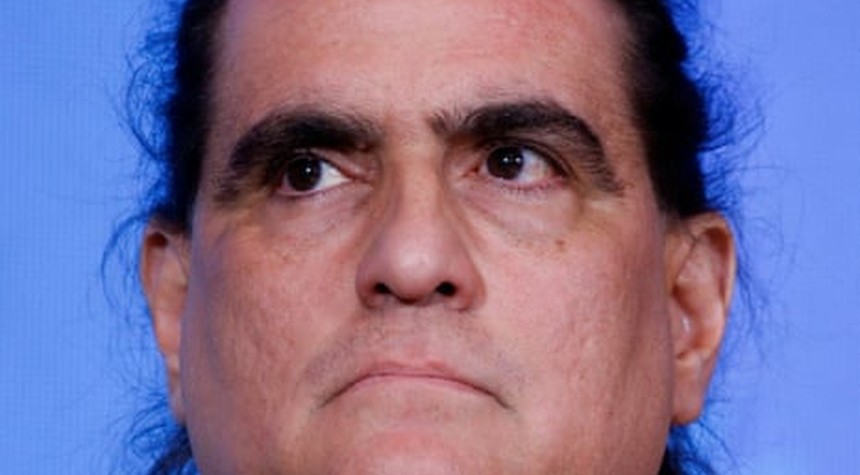
Conflicting accounts emerged Wednesday regarding the reported detention of Alex Saab, a Colombian-Venezuelan businessman who has long served as a financial operator for the deposed Venezuelan government of Nicolás Maduro.
According to intelligence sources, the 54-year-old Saab was taken into custody during the early morning hours at a luxury residence in Caracas by members of the Bolivarian National Intelligence Service. The operation, reportedly conducted in collaboration with the Federal Bureau of Investigation, also allegedly resulted in the detention of Raúl Gorrín, a billionaire media mogul who owns the Globovisión television channel.
A United States official confirmed that American and Venezuelan authorities had coordinated on the operation and indicated that Saab would likely face extradition to the United States within days. The businessman had been removed from his position as minister for industry and national production approximately two weeks after American forces captured an associate of his on January 3rd.
However, substantial questions remain about the veracity of these reports. Saab’s attorney, Luigi Giuliano, categorically denied the detention, characterizing the reports as fabricated and asserting that his client was conducting himself normally in Caracas. Similarly, a representative for Gorrín stated Wednesday evening that the media executive remained free.
The contradictory statements underscore the difficulty of obtaining reliable information from Venezuela, where the collapse of democratic institutions has created an environment of uncertainty and misinformation. What remains clear is that Saab represents a figure of considerable interest to American law enforcement authorities.
Born in Barranquilla, Colombia, Saab emerged as one of the most significant financial facilitators of the Chavista political movement that has governed Venezuela for more than two decades. His proximity to the Maduro regime made him privy to the inner workings of a government that has overseen Venezuela’s transformation from the wealthiest nation in South America to an economic catastrophe marked by hyperinflation, widespread poverty, and mass emigration.
The reported cooperation between American intelligence services and elements within Venezuela’s security apparatus, if confirmed, would represent a noteworthy development in the ongoing political crisis that has gripped the nation. It would suggest that fissures may be developing within the Venezuelan power structure as international pressure mounts on the Maduro regime.
The timing of this operation coincides with a period of significant transition in Venezuela, where opposition forces have made substantial gains in challenging Maduro’s authority. The willingness of Venezuelan intelligence officials to collaborate with American counterparts, assuming these reports prove accurate, may indicate a recognition among some security forces that the current government’s position has become untenable.
As this situation continues to develop, the international community awaits clarification on whether Saab has indeed been detained and, if so, what charges he may face in American courts. The businessman’s knowledge of financial networks that have sustained the Maduro government could prove valuable to investigators seeking to understand how the regime has maintained its grip on power despite crippling economic sanctions.
And that is the situation as it stands this evening in Caracas.
Related: French Raid on X Offices Signals Growing Global Concern Over Grok AI Capabilities