
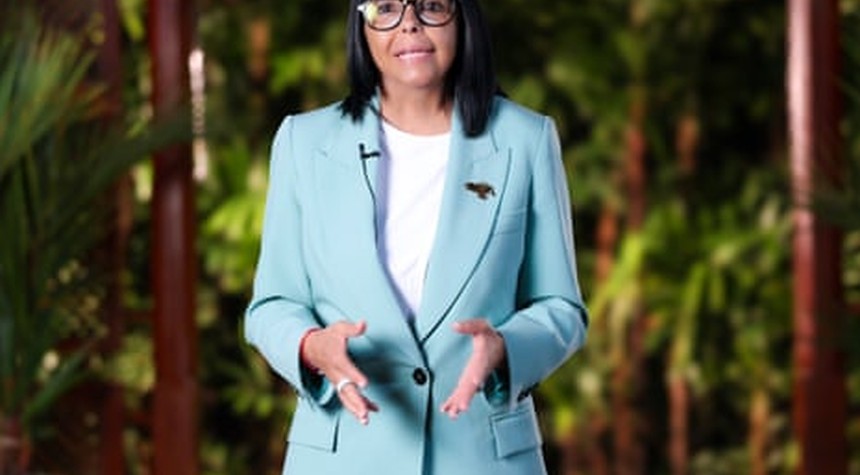
Venezuela’s interim president, Delcy Rodríguez, has mounted a public defense of her government’s energy agreement with the Trump administration, maintaining that her nation will retain ownership and sovereignty over its substantial oil reserves despite American operational control.
Rodríguez, who assumed leadership in January following the removal of Nicolás Maduro by United States special forces, addressed her nation on Saturday to counter mounting criticism of what President Trump has characterized as “the biggest oil deal in world history.”
“The benefits are endless,” declared Rodríguez, a former vice-president whom the Trump administration endorsed after Maduro’s capture during a military operation in Caracas. In her six-minute television address, Venezuela’s acting leader asserted the agreement would enable her resource-rich nation to develop its economy, generate revenues exceeding $209 billion, and emerge as “an energy powerhouse.”
The substance of Rodríguez’s argument centered on practical economics rather than nationalist sentiment. “As everyone knows, our country has the biggest oil reserves in the world,” she stated. “But having resources underground is not enough. We need investment, technology, infrastructure, and production capacity to convert this wealth into wellbeing for our people.”
President Trump announced the agreement on Friday, describing it as a “historic transaction that more than doubles American oil reserves while helping to continue to set Venezuela on a course toward tremendous success and great prosperity.”
The president elaborated on his intentions for the Venezuelan oil on Sunday, writing that he plans to replenish the Strategic National Reserves, which he maintains were depleted during the Biden administration. Trump characterized the arrangement as “a gift from Venezuela to the people of the United States.”
According to available information, the agreement grants Washington operational control over approximately 65 billion barrels of Venezuelan oil reserves. Venezuela possesses the world’s largest proven crude oil reserves, estimated at 303 billion barrels, surpassing Saudi Arabia’s 268 billion barrels and Iran’s 208 billion barrels.
Rodríguez indicated the deal encompasses 17 “strategic oilfields” with projected production capacity exceeding 1.5 million barrels daily.
The agreement has generated significant controversy both within Venezuela’s opposition and among members of the Chavismo political movement to which Rodríguez belongs. The terms were negotiated during months of confidential discussions between Washington and Caracas.
The context surrounding this agreement cannot be separated from the circumstances of its negotiation. Following Maduro’s removal on January 3, President Trump issued a direct warning to Rodríguez regarding American expectations. The message was unambiguous: compliance with Washington’s directives was not optional.
The fundamental question facing observers is whether this arrangement represents genuine economic partnership or something else entirely. Venezuela possesses extraordinary natural resources but has lacked the capital and technical capacity to exploit them effectively for years. American involvement could theoretically provide both elements.
However, the nature of the agreement’s genesis and the imbalance of power between the parties raise legitimate questions about sovereignty and self-determination. When one nation’s military removes another nation’s leader and the successor government subsequently signs over operational control of its primary natural resource, the distinction between partnership and subordination becomes blurred.
The coming months will reveal whether Rodríguez’s optimistic projections materialize or whether Venezuela has exchanged one form of economic dysfunction for another, albeit one that serves American strategic interests.
Related: United States Strikes Iranian Missile Sites as Strait of Hormuz Tensions Continue