
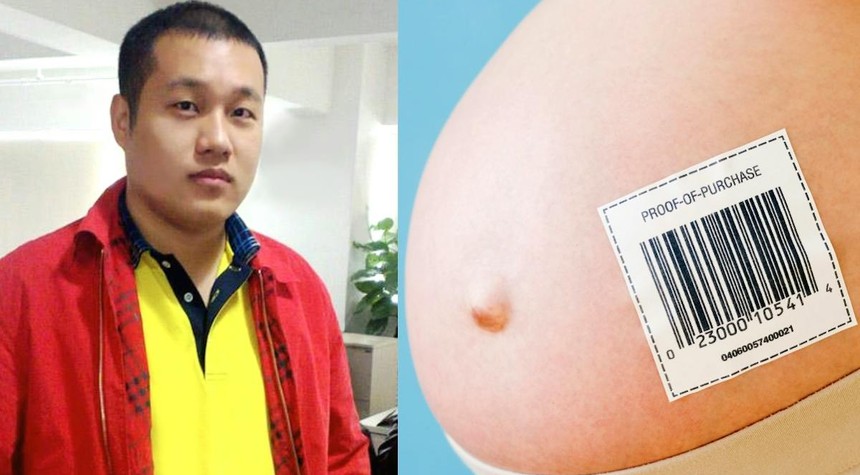
A case involving a Chinese billionaire who has reportedly fathered more than one hundred children through American surrogates has intensified the national debate over birthright citizenship and the ethical boundaries of reproductive services in the United States.
Documents obtained by investigators identify the father as Xu Bo, a Chinese national and prominent video game executive with substantial wealth. According to these records, Xu has been connected to more than one hundred children born on American soil through surrogate arrangements. A former business associate claims the actual number may approach three hundred children.
The scale of this operation came to light through accounts from American women who served as surrogates. One woman, who agreed to speak on condition of limited identification, described her experience with the surrogacy agency Patriot Conceptions. The single mother of a seven-year-old daughter initially saw opportunity in an advertisement promising compensation of one hundred twenty thousand dollars. She hoped the funds would enable her to purchase a home and improve her family’s circumstances.
What she discovered after signing the agreement troubled her considerably. She learned the intended father was a single man who had already contracted with a substantial number of surrogates simultaneously. Despite making at least five requests to meet Xu, she has been denied each time, leaving her to question the nature of the arrangement and her role in it.
The matter took on additional significance when Xu posted a photograph on social media platforms showing more than one hundred young children arranged in rows. Days following that post, he made statements in Chinese suggesting he believes additional children bring blessings and that his actions serve the long-term interests of the Chinese nation.
Under current interpretation of the Fourteenth Amendment by the Supreme Court, virtually every child born on American soil automatically receives United States citizenship, regardless of the parents’ immigration status. The narrow exceptions to this rule do not appear to apply in these circumstances. This means all of Xu’s children born through American surrogates are United States citizens.
Critics of the current birthright citizenship interpretation argue that this case demonstrates a fundamental flaw in the policy. They contend that Xu is effectively purchasing American citizenship through commercial surrogacy arrangements. Florida Governor Ron DeSantis responded to reports of the case by challenging the constitutional interpretation, calling it absurd to suggest the Fourteenth Amendment requires such outcomes.
The situation has prompted legislative action in some states. Florida lawmakers have moved to restrict surrogacy arrangements involving citizens or residents of nations designated as countries of concern, which includes China. These restrictions represent an attempt to address what some view as exploitation of American women and manipulation of citizenship laws.
The case raises profound questions about the intersection of reproductive technology, commercial transactions, and citizenship rights. It forces Americans to consider whether the nation’s birthright citizenship policy, established in a different era, remains appropriate in an age of global mobility and assisted reproduction. The debate extends beyond partisan politics to fundamental questions about what defines citizenship and whether it can, or should, be acquired through economic means.
As this matter continues to unfold, it seems certain to fuel ongoing discussions about immigration policy, reproductive rights, and the meaning of American citizenship in the twenty-first century.
Related: Saudi Arabia Faces Strategic Setback as Houthis Capture Key Red Sea Port