
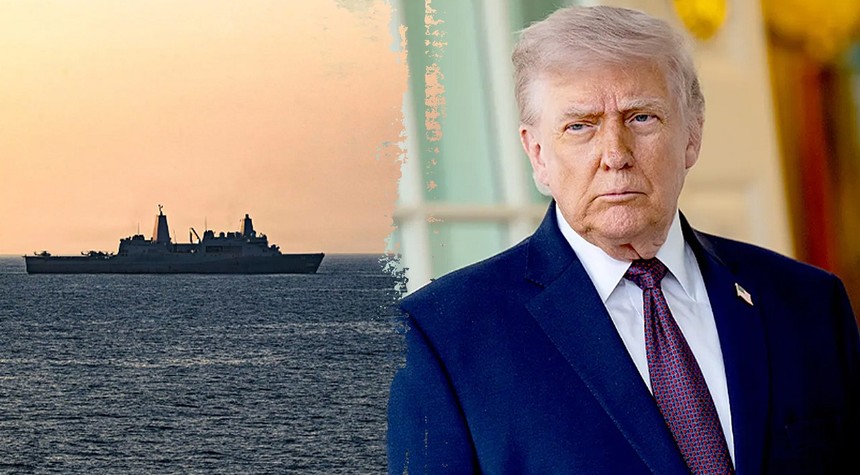
President Trump delivered a stark assessment of diplomatic efforts with Iran on Monday, declaring the current ceasefire to be on “massive life support” and dismissing Tehran’s latest proposal as “a piece of garbage.”
The president’s blunt characterization comes as the nation’s military and national security establishment finds itself divided over whether renewed military operations against Iran would compel meaningful concessions or risk entangling America in yet another protracted Middle Eastern conflict.
Speaking to reporters, the president employed a sobering medical analogy. “I would say the ceasefire is on massive life support,” Trump stated. “Where the doctor walks in and says, ‘Sir, your loved one has approximately a 1% chance of living.'”
The White House has confirmed it is reviewing military options should the current diplomatic track collapse entirely. This represents a critical juncture in American foreign policy, one that will determine whether the United States pursues further military engagement or seeks alternative means of containing Iranian ambitions.
Retired Lt. Gen. H.R. McMaster, who served as national security adviser during Trump’s first administration, offered a measured assessment of Tehran’s willingness to negotiate in good faith. McMaster expressed skepticism that Iran’s leadership, particularly the hardline Islamic Revolutionary Guard Corps, would make the concessions the president considers essential.
“President Trump always wants a deal,” McMaster noted. “But he is not going to sign up for a bad deal.”
The fundamental question now confronting Washington policymakers is whether additional military pressure would successfully force Iran to abandon its nuclear and missile programs, or whether such action would merely deepen regional instability without achieving decisive strategic gains.
Retired Vice Adm. Mark Fox, former deputy commander of U.S. Central Command, represents the more hawkish perspective within military circles. Fox expressed doubt that diplomacy alone would produce the desired outcome.
“I really cannot envision anything other than a full return to combat operations,” Fox stated. “The only thing that they will respond to, I think ultimately, is force.”
Fox argued that American military capabilities remain sufficient to reopen and secure commercial shipping lanes through the Strait of Hormuz, despite ongoing Iranian threats against vessels transiting this vital waterway. The strait represents one of the world’s most critical energy chokepoints, with roughly one-fifth of global oil supplies passing through its narrow waters.
Proponents of renewed military action contend that Iran finds itself weaker than it has been in decades. They argue that halting pressure now would allow Tehran to reconstitute its missile arsenal, rebuild its regional proxy networks, and maintain its threatening posture over international shipping lanes that are vital to global commerce.
The debate reflects broader questions about American power projection in the Middle East and the efficacy of military force in achieving long-term strategic objectives. The nation has learned costly lessons from previous engagements in the region, making any decision to resume combat operations a matter requiring the most careful deliberation.
As negotiations appear to falter, the president faces a decision that will shape not only relations with Iran but America’s broader role in maintaining stability throughout this volatile region.
Related: Violence Escalates in Guerrero as Criminal Organization Attacks Mountain Villages