
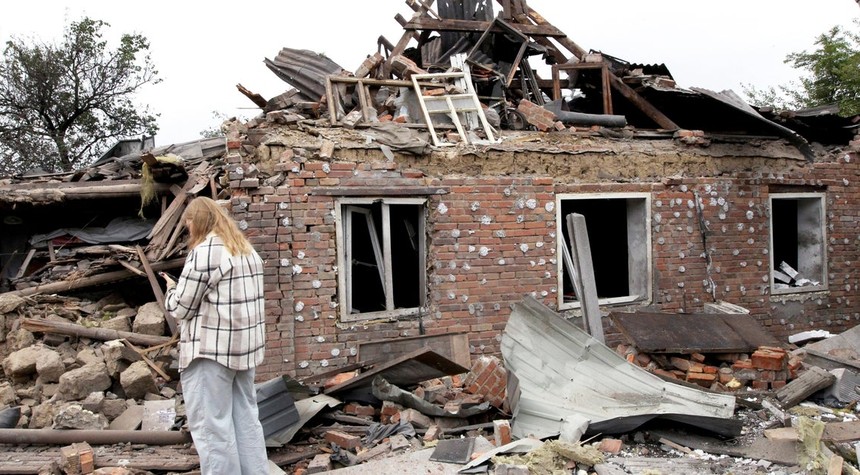
Ukrainian President Volodymyr Zelenskyy declared Monday that his nation endured another wave of Russian missile and drone attacks without advance warning from allied intelligence services, marking a significant deterioration in the operational relationship between Kiev and Washington.
The Ukrainian leader’s statements come amid escalating friction with the Trump administration over the conduct and continuation of the war that has ravaged his country for four and a half years. President Trump accused Zelenskyy over the weekend of deliberately prolonging the conflict, while the Ukrainian president has countered that recent American policy shifts are emboldening Moscow to intensify its campaign.
The latest Russian strikes targeted energy infrastructure and civilian areas, including a medical clinic, school, metro station, and residential buildings, according to Zelenskyy. The attacks underscore the continuing vulnerability of Ukrainian population centers to Russian military operations.
At the heart of the current dispute lies access to critical military technology and intelligence. Zelenskyy stated Saturday that Ukrainian forces remain unable to utilize Starshield, an advanced military variant of the Starlink satellite system developed by Elon Musk’s SpaceX corporation. This network has proven essential for intercepting Russian jet-powered drones and other airborne threats.
The Trump administration has categorically denied altering intelligence-sharing protocols or deliberately impeding technological capabilities provided to Ukraine. A senior Pentagon official stated Monday that there has been no change to Department of War policy regarding intelligence sharing or capabilities being enabled for European allies to provide Ukrainian forces.
Secretary of State Marco Rubio addressed the Starlink controversy Saturday with notable candor, suggesting uncertainty about whether Zelenskyy possessed accurate information regarding the service disruption. Rubio maintained that no American official ordered any reduction in Starlink speeds, characterizing the situation as something that “sort of happened” before being restored, though he offered no technical explanation for this unusual phrasing.
However, Ukraine’s highest-ranking diplomat currently stationed in the United States, chargé d’affaires Denys Sienik, contradicted this assertion. In a statement to journalists Saturday, Sienik reported that Ukrainian officials had received no response from either the Pentagon or SpaceX regarding inquiries about Starlink and Starshield services, including confirmation that full capabilities had been restored.
Zelenskyy elaborated Monday that political agreements exist between the two nations that have not been implemented at operational levels. He further alleged delays in vital military supplies at the Department of War level, though he provided no specific details about which materials were being held up or the reasons for such delays.
These developments occur against the backdrop of the Trump administration’s significant revision of American policy toward Russia. President Trump has eased sanctions to permit Russian energy sales, a move calculated to reduce domestic gasoline prices for American consumers. Zelenskyy has warned that such policy changes risk signaling to Moscow that Western resolve is weakening, potentially encouraging further Russian aggression.
The increasingly public nature of this dispute between Washington and Kiev represents a marked shift from the unified front that characterized the previous administration’s approach to the conflict. As the war enters its fifth year, the question of sustained American support remains central to Ukraine’s capacity to defend itself against continued Russian military operations.
Related: France Detains Record 855 as Protests Turn Violent Across Major Cities