
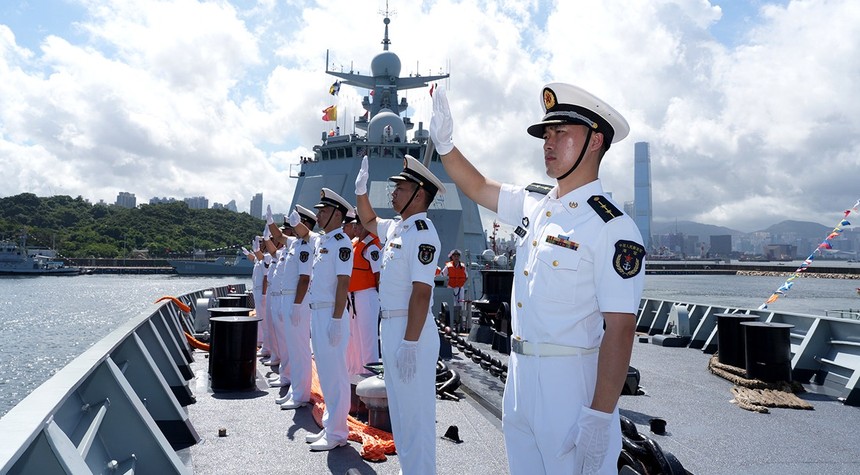
The United States finds itself at a critical juncture in maritime security as China systematically transforms commercial shipping infrastructure into instruments of political leverage across the globe.
U.S. Ambassador to the United Kingdom Warren Stephens delivered a stark warning to the International Maritime Organization Council this week, outlining Beijing’s coordinated campaign to weaponize port access, shipping lanes, and supply chains against sovereign nations. The ambassador’s remarks underscore a growing concern within the Trump administration that America’s traditional dominance of international waters faces unprecedented challenge.
“Beijing has pursued an aggressive strategy of acquiring port concessions and infrastructure around the world, not simply for commercial gain, but to extend its strategic reach and weaponize that access against sovereign nations,” Stephens stated in his address to the maritime body.
The ambassador emphasized that the United States maintains substantial stakes in global maritime security. The American Maritime Transportation System generates $5.4 trillion in annual economic activity and supports nearly 30 million jobs, making the nation what Stephens termed “a cornerstone of the global maritime economy.”
President Trump has responded to these maritime threats with renewed emphasis on Greenland’s strategic importance. Speaking at a NATO summit in Ankara, Turkey, the president connected Chinese naval expansion directly to his administration’s interest in securing American control over the Danish territory.
“Denmark doesn’t spend money to really help Greenland, but it’s an important part for the United States. And it’s surrounded by China ships and Russian ships,” Trump stated at the summit, where NATO defense spending has increased substantially under new policy frameworks.
The president argued that Greenland’s position between the Arctic and North Atlantic oceans makes it essential to American security interests, particularly as Chinese and Russian vessels increase their presence in Arctic waters. Trump expressed frustration with Denmark’s reluctance to negotiate control of the territory, noting the substantial American military investment in European defense.
“With all the money we spend to help them with Russia, and we don’t have to spend any money, we could remove all of our soldiers out of Europe because, as you probably noticed, Europe is a very different place than it was 20 years ago,” the president observed.
The convergence of these concerns reflects a broader strategic reassessment within the administration. As China continues its unprecedented naval buildup and port acquisition strategy, American policymakers are evaluating both traditional alliances and territorial arrangements through the lens of maritime security.
Ambassador Stephens made clear that the United States will not remain passive in the face of Chinese maritime expansion. “President Trump has made restoring American maritime leadership a national priority,” he told the International Maritime Organization.
The evidence of China’s intentions continues to mount. The nation currently builds more vessels than any other country and has secured port concessions on every inhabited continent, creating a network of strategic chokepoints that could, in times of conflict or political disagreement, severely disrupt global commerce.
These developments occur as the Trump administration pursues diplomatic initiatives in critical waterways, including ongoing peacemaking efforts in the Strait of Hormuz, where freedom of navigation remains contested.
The question now facing American strategists is whether traditional diplomatic and military postures will suffice to counter China’s patient, systematic approach to maritime dominance, or whether more dramatic measures will prove necessary to preserve American interests in an increasingly contested global commons.
Related: United States Responds to Iranian Aggression Against Commercial Shipping