
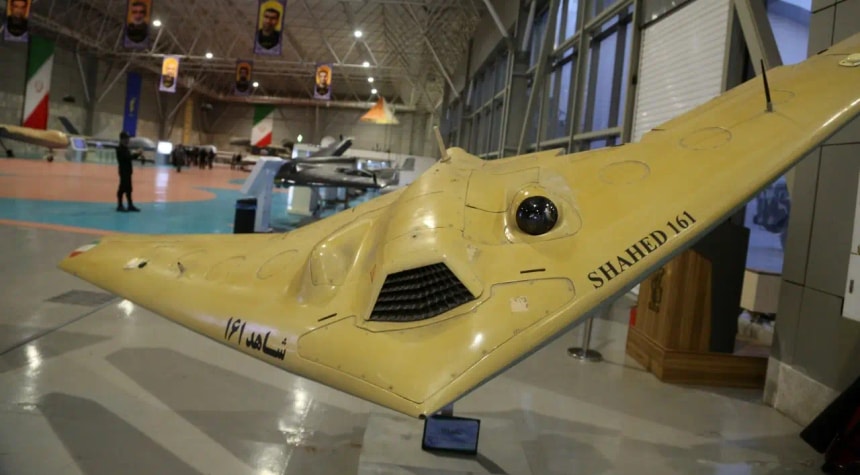
Iran’s Islamic Revolutionary Guard Corps launched drone strikes against what it identified as an American military radar installation in Bahrain on Tuesday, the third such attack in five days following a roughly two-month cessation of hostilities in the region.
The targeted facility, according to Iranian military statements, was a radar system located at Sheikh Isa base in Bahrain, home to the United States Fifth Fleet. Bahraini defense forces successfully intercepted the incoming unmanned aerial vehicles after issuing security alerts that directed residents to shelter. Authorities declared an all-clear later that morning, with no casualties or property damage reported from the incident.
United States Central Command confirmed the attempted strike and stated that the Iranian drones failed to reach their intended target. American military assets sustained no damage, and no personnel were injured in the engagement, according to official military statements.
This latest assault follows a similar pattern established over the weekend. On Sunday, the Revolutionary Guard claimed responsibility for launching six drones against a radar system at the Al-Riffa helicopter base, an attack that Bahraini forces also successfully repelled. That strike occurred just two days after Friday’s initial attempt against American radar installations in Bahrain, the first significant military action after the extended pause. American forces intercepted both drones in Friday’s incident without sustaining casualties or equipment losses.
The resumption of hostilities comes at a delicate moment in the broader regional conflict. President Donald Trump has indicated to advisors that further American strikes against Iran may not occur if provocations from the Revolutionary Guard and the Iranian-backed Houthi forces in Yemen cease. The administration appears to be adopting a posture of strategic restraint contingent upon Iranian behavior.
Meanwhile, the Trump administration maintains a naval blockade against Iran, applying severe economic pressure to Tehran. The President has stated clearly that this blockade will remain in effect as long as Iran continues efforts to disrupt maritime traffic through the Strait of Hormuz, one of the world’s most critical chokepoints for global energy transportation.
Recent days have witnessed an increase in attacks on commercial tankers transiting the strait. Regional powers have engaged in bilateral negotiations regarding transit arrangements for this vital waterway, discussions from which the United States has been notably absent. President Trump has signaled his administration would reject any arrangement negotiated without American participation, particularly any agreement that would grant Tehran control over passage through the strait.
The strategic significance of these developments cannot be overstated. The Strait of Hormuz remains essential to global energy markets, and American military presence in Bahrain serves as a cornerstone of regional security architecture. The Revolutionary Guard’s decision to resume attacks after a two-month lull suggests either a calculated test of American resolve or a response to the economic pressures imposed by the naval blockade.
The effectiveness of Bahraini and American defensive systems in intercepting these drone strikes demonstrates the technical capabilities deployed in the region, yet the persistence of Iranian attempts indicates that tensions remain far from resolution. How this delicate balance of pressure and restraint evolves will have profound implications for regional stability and global energy security.
Related: Ecuador Denies Operating American Military Base Despite Expanded US Presence at Taura