
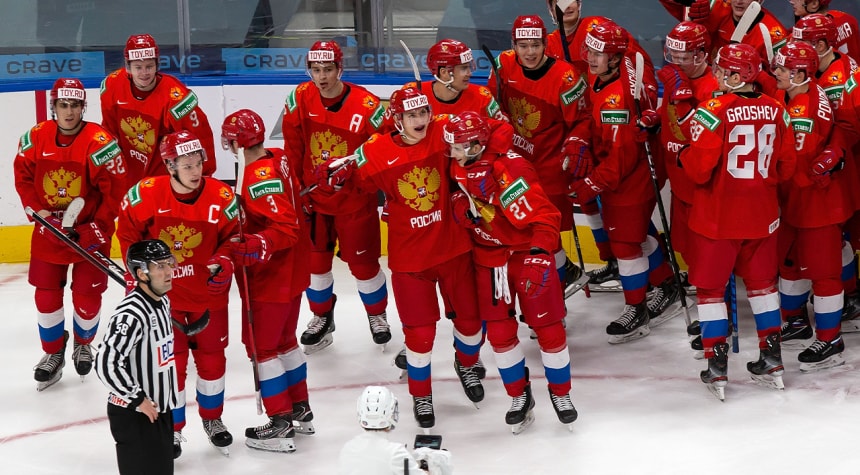
The International Ice Hockey Federation found its website taken offline Tuesday following what appears to be a coordinated hacking incident, the latest development in an escalating diplomatic confrontation over Russia’s participation in international ice hockey competitions.
The website disruption occurred after Canada announced it would bar the Russian team from entering the country for the upcoming World Junior Championship. Sources familiar with the incident report that hackers posted a message advocating for Russia’s participation in international tournaments, accompanied by images of Russian hockey players. As of midday Tuesday, the federation’s website remained inaccessible, displaying only a generic maintenance notice.
The cyber attack represents just one front in a broader conflict that has placed the International Ice Hockey Federation in an increasingly untenable position. Russia has been excluded from IIHF competition since its invasion of Ukraine began. However, the Court of Arbitration for Sport ruled earlier this year that the country should be reinstated to international competition, creating a direct clash between legal rulings and political realities.
Canada, which will host the World Junior Championship in Edmonton and Red Deer, has taken an unequivocal stance. Prime Minister Mark Carney stated that Russian and Belarusian athletes would not compete for their countries on Canadian soil as long as they continue supporting what he termed an illegal and unjustified war in Ukraine. His declaration left no room for interpretation regarding Russia’s absence from the upcoming tournament.
The Canadian position has found considerable support among European hockey nations. Sweden, Finland, the Czech Republic, Norway, Latvia, and Denmark have each issued formal statements indicating they would boycott any games scheduled against Russian teams. This united front effectively isolates Russia even if the federation were to formally include them in tournament draws.
Economic pressure has also entered the equation. STRAUSS, one of the tournament’s primary sponsors, has threatened to withdraw its financial support should Russian teams participate. Such corporate involvement underscores how deeply the athletic boycott has become intertwined with broader Western responses to the conflict in Ukraine.
The situation places the International Ice Hockey Federation in an extraordinarily difficult position. On one hand, it faces a binding legal ruling from sport’s highest arbitration body mandating Russian participation. On the other hand, it confronts the practical reality that host nations may refuse entry to Russian teams, major hockey powers threaten boycotts, and corporate sponsors could abandon events.
This is not merely an athletic dispute. It reflects the ongoing challenge facing international sporting bodies as they navigate the intersection of athletic competition, geopolitical conflict, and national sovereignty. The federation must balance its stated mission of promoting international hockey against the firmly held positions of some of its most important member nations.
The timing of the cyber attack suggests a deliberate attempt to disrupt federation operations and draw attention to Russia’s exclusion. Whether the incident will influence the federation’s handling of the broader dispute remains to be seen. What is certain is that the World Junior Championship will proceed without Russian participation, regardless of what international arbitration bodies may decree.
Related: Bahrain Intercepts Iranian Drones Targeting United States Military Base