
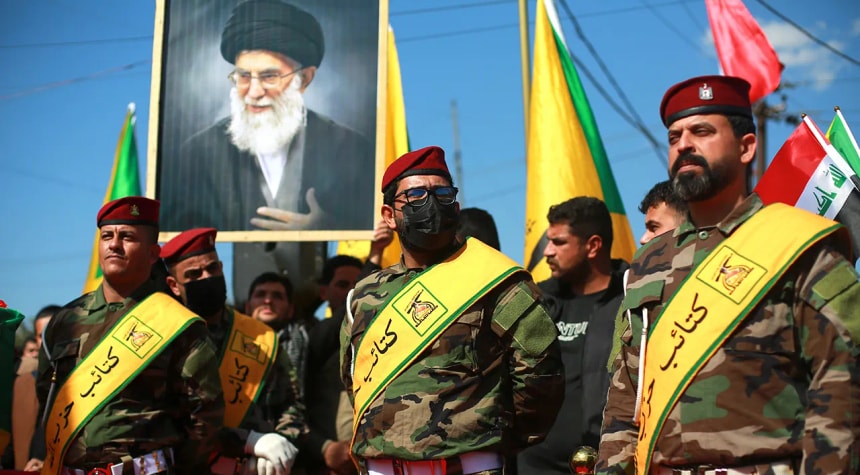
Elizabeth Tsurkov spent the first four and a half months of her 903-day captivity in a family home converted into a secret prison by Kata’ib Hezbollah, the Iran-backed militia that has controlled a strategic area south of Baghdad since 2014. That same territory, Jurf al-Sakhr, is now the target of an Iraqi government operation to restore state control, backed publicly by the Trump administration.
Tsurkov, an Israeli-Russian researcher and senior fellow at the New Lines Institute for Strategy and Policy, was abducted in Baghdad in March 2023. Her release came in September 2025 after sustained diplomatic pressure from Washington. What she witnessed during those months raises fundamental questions about Iraqi sovereignty and the extent to which Iran-backed militias operate beyond Baghdad’s reach.
The researcher describes Jurf al-Sakhr not merely as a site of alleged oil smuggling, but as effectively closed territory where the Iraqi government has exercised no meaningful authority for more than a decade. When Kata’ib Hezbollah helped drive Islamic State forces from the area in 2014, the militia prevented the return of an estimated 120,000 to 180,000 predominantly Sunni residents. The district has remained under militia control ever since.
Tsurkov now calls for Iraqi authorities to search the area thoroughly for secret prisons, mass burial sites, and weapons storage facilities. She argues that any serious effort to restore government control must include returning confiscated homes to their rightful owners, a step she views as essential to genuine restitution of state sovereignty.
Prime Minister Ali al-Zaidi, who has received strong backing from President Trump, has ordered Iraqi armed forces into Jurf al-Sakhr and given the militia a deadline to withdraw. The move follows allegations that Kata’ib Hezbollah has stolen hundreds of millions of dollars in state-owned oil since 2021. Baghdad has dismissed nine security and administrative officials and referred suspects to the judiciary. The militia denies any wrongdoing.
Yet skepticism about the operation’s ultimate scope remains considerable. Michael Knights, head of research at Horizon Engage and an adjunct fellow at the Washington Institute for Near East Policy, notes the difficulty in distinguishing between genuine crackdowns on Iran-backed militias and political theater designed to satisfy international pressure without fundamentally challenging militia power.
The historical record provides reason for caution. In June 2020, then-Prime Minister Mustafa al-Kadhimi ordered the arrest of 14 Kata’ib Hezbollah members. Armed militia supporters descended on Baghdad’s fortified International Zone demanding their release. Most were subsequently freed, according to a United States government inspector general report. Five months later, al-Kadhimi survived an explosive drone attack on his residence that security officials attributed to Iran-backed militias.
Knights emphasizes that Iraqi counterterrorism forces possess superior training and equipment compared to the militias. The critical vulnerability, however, lies not in military capability but in the militias’ willingness to threaten officials and their families. This capacity for retaliation against commanders who challenge the armed groups represents the most significant obstacle to restoring government authority.
The current operation is being presented primarily as an anti-corruption campaign rather than a dismantling of Kata’ib Hezbollah’s military infrastructure. Tsurkov points out that the organization maintains bases elsewhere in Iraq and controls access to border crossings with Iran, providing opportunities to replenish weapons even if Jurf al-Sakhr is lost.
During her captivity, Tsurkov interacted with approximately 45 different individuals across three different prisons. She later supplemented these observations with interviews involving former militia members and people familiar with their communities. Her assessment is that the organization comprises a small core of deeply committed Iranian loyalists and a much larger group of recruits motivated primarily by salaries, status, and the exercise of power over others.
Whether Baghdad’s current operation represents a genuine reassertion of state sovereignty or another accommodation with militia power dressed in the language of reform remains to be seen. The Trump administration’s support for Prime Minister al-Zaidi suggests American interest in testing Iraq’s willingness to confront Iranian influence within its borders. For the tens of thousands of displaced Iraqis who have been unable to return home for over a decade, the answer to that question carries profound consequences.
Related: Bahrain Intercepts Iranian Drones Targeting United States Military Base