
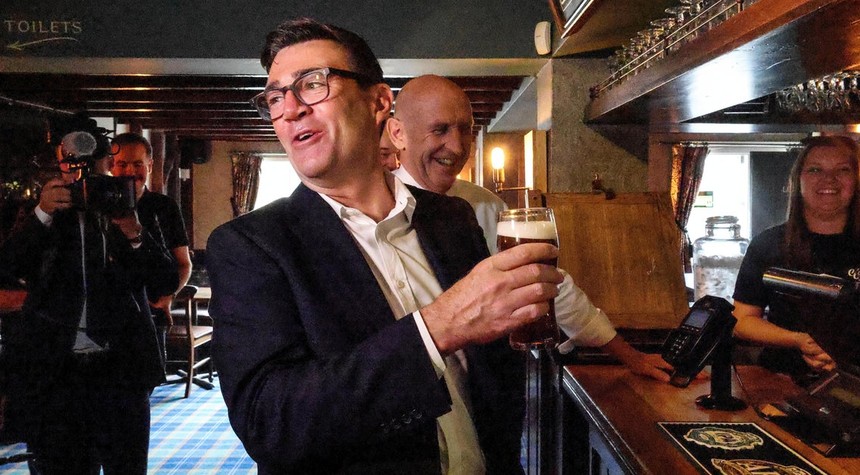
LONDON — In what marks a significant departure from policies established during the Thatcher era, British Prime Minister Andy Burnham has publicly challenged a four-decade prohibition on alcohol consumption at top-tier men’s soccer matches, calling the restriction discriminatory and ripe for reconsideration.
Speaking to reporters Wednesday in New York, where he was attending the United Nations General Assembly, Burnham made clear his position that football fans ought not be singled out for treatment different from supporters of other sports. The Prime Minister indicated his government is considering a trial program to reintroduce alcohol consumption in stadium seating areas.
The prohibition in question dates to 1985, when Margaret Thatcher’s government moved to ban alcohol in the bleachers at men’s soccer games throughout England and Wales. Home Secretary Leon Brittan justified the measure at the time by citing alcohol as a major contributory factor in the violent and disorderly behavior that had come to plague British soccer stadiums.
The legislation has remained in force ever since. Fans attending matches in the top five divisions may still purchase and consume alcohol in stadium concourses before matches and during halftime intervals, but they are prohibited from carrying alcoholic beverages back to their seats or drinking within view of the pitch. No other sport in the United Kingdom faces such restrictions.
The practical effects of this policy are evident at older stadiums with limited facilities, where queues for beer during halftime can grow so lengthy that supporters leave their seats before the referee has even signaled the end of play.
Burnham, who holds a season ticket at Premier League club Everton, has long questioned the fairness of this policy. When pressed Wednesday on whether he maintained his previously stated opposition to the ban, he responded affirmatively, noting that the legislation dates to an era when football was considerably different. He suggested various approaches to addressing the matter, including implementation on a trial basis.
The Football Supporters’ Association issued a statement Thursday welcoming the Prime Minister’s comments and reiterating its longstanding position that criminalizing football fans for having a pint while watching a match constitutes unfair treatment. The organization noted that many clubs favor reintroduction of alcohol sales and characterized the current legislation as outdated.
Recent developments in women’s football have highlighted the inconsistency of current policy. Following a successful pilot program in the Women’s Super League, fans attending matches in the highest level of English women’s soccer have been permitted to drink in the stands since the current season began.
The historical context for the ban, however, cannot be dismissed lightly. Soccer hooliganism in 1970s and 1980s England, sometimes termed the “English Disease,” involved rival gangs linked to clubs engaging in violent confrontations and vandalism in and around stadiums. Several high-profile fatalities connected to hooliganism drove policy changes, including the death of a 14-year-old boy crushed against a wall by police responding to violence between Birmingham City and Leeds United supporters.
Police authorities have consistently supported the alcohol prohibition since its implementation. The question now facing British society is whether conditions have changed sufficiently in the intervening four decades to warrant reconsideration of policies enacted during a particularly troubled period in English football history.
And that is the way it is.
Related: Venezuela Blocks Opposition Leader’s Return as Political Transition Talks Continue