
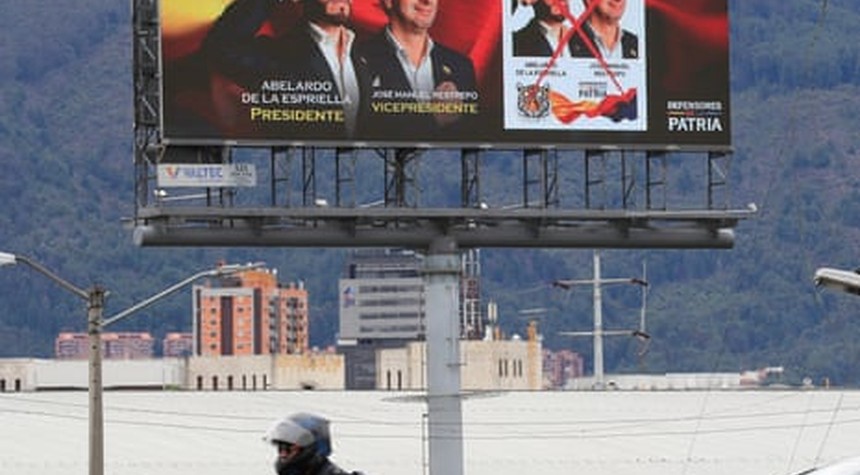
Colombians went to the polls Sunday in a presidential election that has crystallized into a fundamental choice about how their nation should confront the return of violence that many had hoped was behind them.
Ten years after Colombia signed what was hailed as a transformative peace agreement with guerrillas of the Revolutionary Armed Forces of Colombia, the South American nation finds itself once again grappling with armed conflict that has intensified dramatically in recent months. The election represents a referendum on President Gustavo Petro’s approach to ending the violence, and the outcome will determine whether Colombia continues down the path of negotiation or returns to harder-line tactics.
The violence has touched the campaign itself in the most direct terms. Last June, presidential candidate Miguel Uribe Turbay, 39, was shot and killed at a political rally. Criminal groups have employed drone strikes with increasing frequency, and armed attacks have become a persistent threat throughout the race.
While fourteen candidates appear on the ballot, the contest has effectively narrowed to three serious contenders, each offering distinctly different approaches to the crisis.
Senator Iván Cepeda, an ally of the outgoing president and himself a peace advocate, has led in polling. He pledges to continue Petro’s “total peace” initiative, which seeks to negotiate with remaining rebel groups and achieve comprehensive peace agreements. Despite the program’s mixed results, Cepeda maintains substantial support, bolstered by progressive economic policies implemented under Petro, including increases to the minimum wage.
The peace initiative’s critics point to a fundamental flaw in its execution. Criminal organizations have exploited government-declared ceasefires, using the respite to consolidate power and expand operations rather than genuinely pursuing peace.
Against this backdrop, two candidates have gained traction by promising a more forceful response. Abelardo de la Espriella, a lawyer who has cultivated a combative image and earned the nickname “the Tiger,” has surged in recent weeks by positioning himself as an outsider willing to adopt the aggressive anti-gang tactics employed in El Salvador. That Central American nation’s approach dramatically reduced gang violence but generated serious concerns about human rights violations and due process.
Paloma Valencia represents the political tradition of former President Álvaro Uribe, a strongman whose tenure was marked by military confrontation with rebel groups. Her candidacy appeals to Colombians who believe the answer to violence lies in demonstrating overwhelming state force rather than offering negotiated settlements.
The choice facing Colombian voters reflects a tension that has defined their nation’s modern history. The 2014 peace accord with the FARC represented hope that Colombia could break free from cycles of violence that had consumed it for generations. Yet the return of armed conflict, the proliferation of criminal groups, and the assassination of a presidential candidate suggest that peace remains elusive.
For a nation weary of violence but divided on solutions, Sunday’s vote will determine not merely who leads Colombia, but what principles will guide the country’s approach to its most persistent challenge. Whether Colombians choose continued negotiation or renewed confrontation, the stakes could hardly be higher for a people who have known too much conflict and too little lasting peace.
Related: Brazil Rejects US Terror Designation of Criminal Gangs as Rubio Meets with Bolsonaro Family