
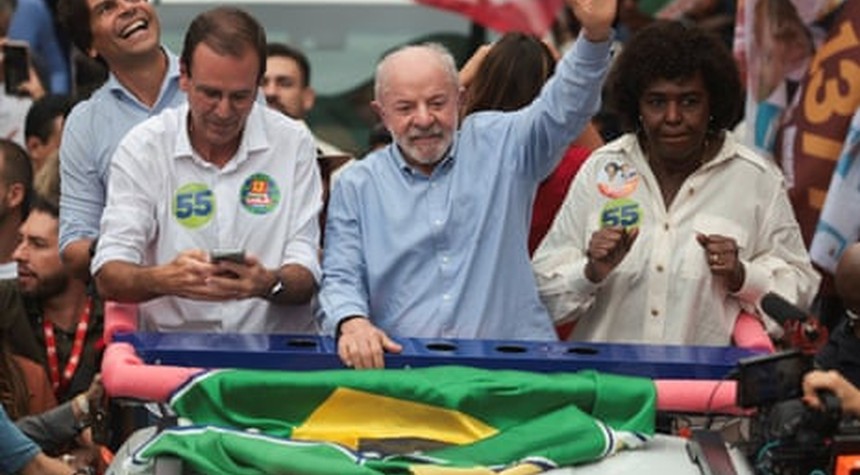
Thirty-one Democratic members of Congress have formally expressed concern to Secretary of State Marco Rubio regarding what they characterize as improper American involvement in Brazil’s upcoming presidential election, scheduled for October 4th.
The correspondence, signed by thirty House members and Senator Bernie Sanders, addresses a series of actions taken by the Trump administration that the legislators believe constitute interference in the democratic processes of Latin America’s most populous nation. Brazil’s election presents a closely contested race between incumbent leftist President Luiz Inácio Lula da Silva and far-right Senator Flávio Bolsonaro.
The congressional delegation outlined what they view as a troubling pattern of American intervention in regional elections, referencing recent contests in Argentina, Honduras, and Colombia. Earlier this year, a smaller group of Democratic lawmakers had raised similar concerns regarding alleged interference in Colombia’s presidential race.
The substance of their complaint centers on several specific actions. When President Trump initially imposed tariffs on Brazil last year, he explicitly connected the economic measures to the ongoing legal proceedings against Jair Bolsonaro, the former Brazilian president facing trial for his alleged attempt to overturn the 2022 election results. The former president was subsequently convicted and placed under house arrest, forcing him to withdraw from the race in favor of his son Flávio.
Additional tariffs imposed on Brazil in July under Section 301 of US trade law have further strained bilateral relations. The Democratic lawmakers also cited an attempted diplomatic mission wherein two American officials planned to travel to Brazil, ostensibly to evaluate the country’s electoral system. Brazil’s electronic voting infrastructure has earned international recognition for its reliability and security, making the proposed visit appear suspect to many observers.
The Brazilian government denied entry visas to the American delegation.
President Lula has publicly and repeatedly accused the Trump administration of attempting to influence Brazil’s electoral outcome. During his address to the United Nations General Assembly this week, the Brazilian leader declared that his nation would not tolerate interference from democracy’s enemies, whether domestic or foreign, though he declined to name specific actors.
The congressional letter argues that rather than supporting democratic institutions in Brazil, current American policy represents a departure from traditional diplomatic norms. The lawmakers contend that the combination of economic pressure through tariffs, public criticism of a sovereign judicial process, and the attempted electoral monitoring mission constitutes an unprecedented level of involvement in a friendly nation’s internal affairs.
This controversy unfolds against the backdrop of broader questions regarding America’s role in hemispheric politics. The Western Hemisphere has long represented a sphere of particular American interest, but the methods and extent of that engagement have varied considerably across different administrations.
As Brazil prepares for its first round of voting, the diplomatic tension between Washington and Brasília adds another dimension to an already complex electoral landscape. Whether these concerns raised by Democratic legislators will prompt any adjustment in administration policy remains to be seen. What is certain is that the relationship between the United States and its largest southern neighbor faces scrutiny at a particularly sensitive moment in Brazil’s democratic calendar.
Related: Israeli Prime Minister Uses UN Platform to Rally Domestic Voters Ahead of Election