
Three Republican members of Congress representing Florida’s Cuban-American communities are calling on the Trump administration to eliminate the remaining channels of commercial support flowing to Cuba’s communist government, following recent actions that have effectively blocked critical oil imports to the island nation.
Representatives Carlos Giménez, Mario Díaz-Balart, and María Elvira Salazar have directed their appeal to the Commerce Department, requesting the termination of export licenses that they say allow more than $100 million in goods to reach not the Cuban people, but the regime itself.
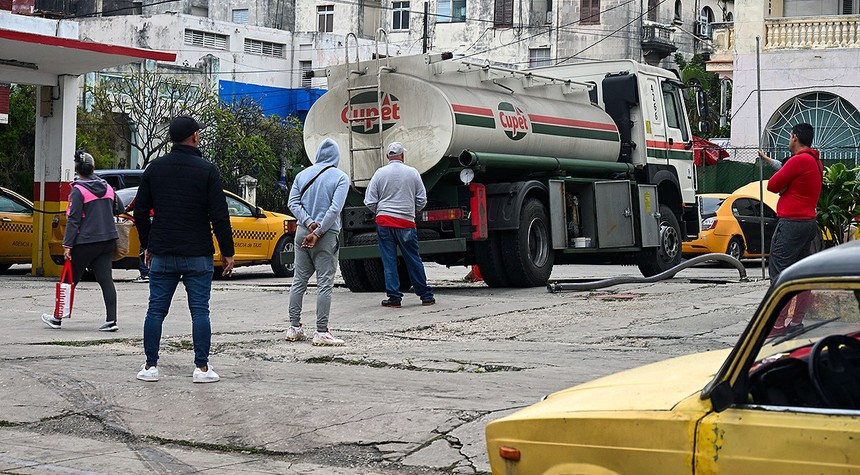
The timing of this congressional pressure is significant. Cuban leader Miguel Díaz-Canel has acknowledged his country is approaching a point of failure, with oil supplies potentially exhausted within fifteen days. The German publication Deutsche Welle reported these warnings, which come as the threat of American tariffs on nations exporting to Cuba takes hold.
While Díaz-Canel has characterized the American oil blockade with inflammatory language, calling it both genocidal and fascist, the three Florida lawmakers view the development quite differently. They see an opportunity to apply maximum pressure on a regime that has maintained its grip on power for more than six decades.
According to documentation provided by Giménez’s office, the Commerce Department’s Bureau of Industry and Security continues to approve export licenses for luxury goods. A fifty-page document details manifests showing luxury automobiles, Jacuzzi tubs, and similar high-end items being shipped to addresses in central Havana, including the Plaza de la Revolución, the symbolic heart of Cuba’s communist government. These licenses have been granted to several Miami-area firms.
The lawmakers addressed their concerns in a letter to Commerce Under Secretary Jeffrey Kessler and Bradley Smith, Director of the Treasury Department’s Office of Foreign Assets Control. Their message was direct and unequivocal.
The representatives expressed deep concern about American businesses conducting what they termed disturbing commercial activity with entities controlled by a regime officially designated as a State Sponsor of Terrorism. They argued that such commerce risks undermining the fundamental objectives of American sanctions policy and contradicts congressional intent as expressed in the Cuban Liberty and Democratic Solidarity Act of 1996, commonly known as the Helms-Burton Act.
The situation presents a test case for the administration’s approach to economic pressure on authoritarian regimes. The Florida lawmakers are arguing that half-measures prove ineffective. If the goal is to weaken the Castro-Díaz-Canel regime’s hold on power, they contend, then all available economic levers must be employed.
The irony is not lost on observers that luxury goods continue flowing to regime addresses in Havana while ordinary Cubans face shortages of basic necessities. This disparity underscores the lawmakers’ argument that current export licenses serve to enrich government officials rather than improve conditions for the Cuban people.
As the oil situation in Cuba grows increasingly desperate, the three representatives are pressing for action before the regime can secure alternative supply routes or before international pressure mounts on the United States to ease restrictions. Their demand represents not merely symbolic politics but a concrete policy proposal with measurable economic impact.
The outcome of this congressional pressure will indicate whether the administration is prepared to pursue maximum economic leverage against the Cuban government or whether commercial considerations and diplomatic complications will temper the approach.
Related: Trump Threatens to Block Michigan-Canada Bridge Opening Over Trade Dispute