
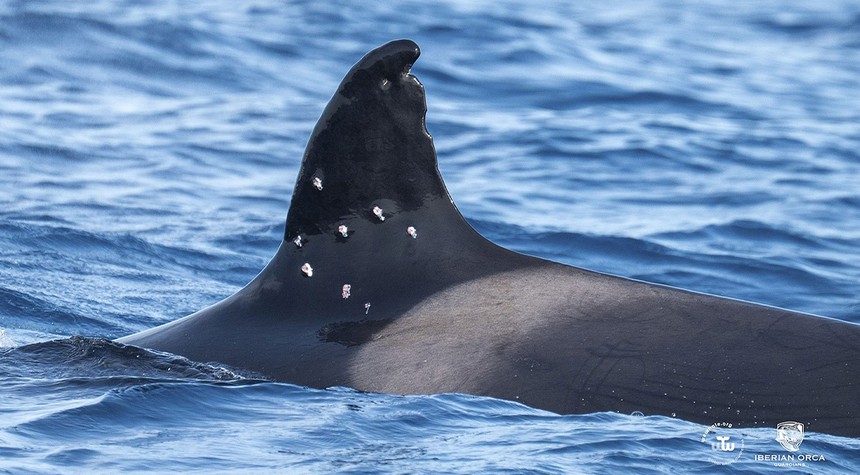
Spanish maritime authorities have opened an investigation into what conservationists believe was a deliberate shooting of Toñi, the oldest known Iberian orca, who surfaced in the Strait of Gibraltar this week bearing multiple fresh wounds consistent with shotgun pellet impacts.
The injuries, discovered on the approximately 60-year-old killer whale, have raised troubling questions about escalating tensions between humans and orcas in waters where these encounters have grown increasingly frequent and contentious in recent years.
Spain’s Ministry for the Ecological Transition and the Demographic Challenge initiated preliminary investigative proceedings on August 12, one day after receiving reports from WeWhale, a marine conservation organization operating under government authorization in the region. Ministry officials described the marks as compatible with possible pellet shots, though they have not yet reached a definitive conclusion about the cause.
The evidence, however, appears compelling to those who know Toñi well. Conservation groups WeWhale and Iberian Orca Guardians reported that their teams had photographed and observed the orca just weeks earlier, when no such wounds were present. The sudden appearance of approximately ten apparent pellet impacts on the left side of her dorsal fin, with at least two or three projectiles appearing to have passed completely through the tissue, suggests a deliberate act rather than accidental injury.
The timing and nature of these wounds carry particular significance given the ongoing conflict between orcas and vessels in the Strait of Gibraltar. For several years, Iberian orcas have engaged in what some describe as aggressive interactions with boats, occasionally causing damage and raising concerns among mariners. Whether Toñi’s injuries represent retaliation for such encounters remains under investigation.
At her advanced age, Toñi faces heightened risks from these wounds. The dorsal fin contains a rich blood supply and plays a crucial role in thermoregulation. WeWhale warned that the injuries could lead to tissue damage, swelling, or infection. Should any pellets remain lodged within the tissue, the possibility of a life-threatening infection cannot be dismissed.
Yet there are reasons for cautious optimism. Observers report that Toñi continues to swim and hunt normally, suggesting the injuries have not yet compromised her essential functions. WeWhale has committed to continued monitoring of her condition.
The incident stands in stark contrast to more peaceful encounters between marine mammals and humans. Off San Diego, a rescue dog named Fin recently watched from a boat’s bow as two humpback whales engaged in what their captain described as a gentle, ninety-minute play session, approaching the vessel repeatedly in apparent curiosity.
The investigation into Toñi’s injuries continues as authorities work to determine responsibility for what may prove to be a criminal act against one of the world’s most endangered orca populations. The Iberian orca population numbers fewer than fifty individuals, making each animal’s survival critical to the subspecies’ future.
Related: Trump Warns Oman Against Interference in Iran Standoff