
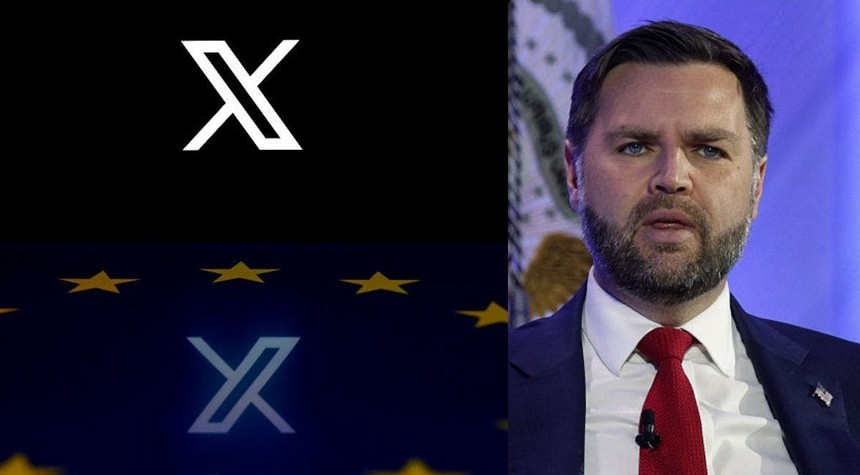
The European Union levied a $140 million fine against X, the social media platform owned by Elon Musk, marking an escalation in the ongoing friction between American technology companies and European regulatory authorities.
The European Commission announced Friday that X violated the bloc’s Digital Services Act, legislation enacted in 2022 to address what European officials characterize as illegal content and misinformation on social media platforms. The commission’s charges center on three principal allegations: that the company misled users through its verification system, failed to meet advertising transparency standards, and denied researchers appropriate access to platform data.
The commission’s primary grievance concerns X’s blue checkmark verification system. According to European officials, the platform permits users to obtain verified status without meaningful authentication of their identity, thereby compromising users’ ability to assess the legitimacy of accounts and content. While the Digital Services Act does not mandate user verification, European authorities maintain the regulation explicitly prohibits platforms from falsely representing that verification has occurred when no such process took place.
Henna Virkkunen, executive vice president for Tech Sovereignty, Security and Democracy, stated that deceiving users with verification badges, concealing advertising information, and excluding researchers violate European standards for online conduct. She emphasized that the enforcement action holds X accountable for what the commission views as undermining user rights and evading regulatory oversight.
The fine prompted swift condemnation from senior American officials. Vice President JD Vance criticized the European Union before the formal announcement, characterizing the anticipated penalties as an attack on free expression rather than legitimate regulatory action. Secretary of State Marco Rubio described the fine as an assault not merely on one company but on American technology platforms broadly and, by extension, the American people.
Federal Communications Commission Chairman Brendan Carr joined the criticism, asserting that European authorities are effectively taxing American citizens. Carr suggested the fine represents a pattern of European regulatory action against successful American technology firms, arguing that the continent employs such measures to subsidize economies constrained by their own regulatory frameworks.
Musk defended his platform’s verification approach, explaining that his objective was to democratize the verification process rather than maintain it as a privilege controlled by what he termed biased elites.
The dispute reflects broader tensions regarding regulatory jurisdiction and free speech principles. Conservative voices in America have characterized the Digital Services Act as a mechanism for European authorities to restrict expression, with implications extending beyond European borders to affect American citizens and companies.
This enforcement action represents the first formal non-compliance decision under the Digital Services Act, establishing a precedent that may influence future regulatory interactions between the European Union and American technology platforms. The episode underscores the growing divergence between American and European approaches to online content moderation and platform governance.
As transatlantic commerce becomes increasingly digital, such regulatory conflicts raise fundamental questions about sovereignty, speech, and the extent to which foreign governments may impose their standards on American enterprises and their users.
Related: Venezuela’s Oil Reserves Draw Scrutiny Amid Caribbean Military Operations