
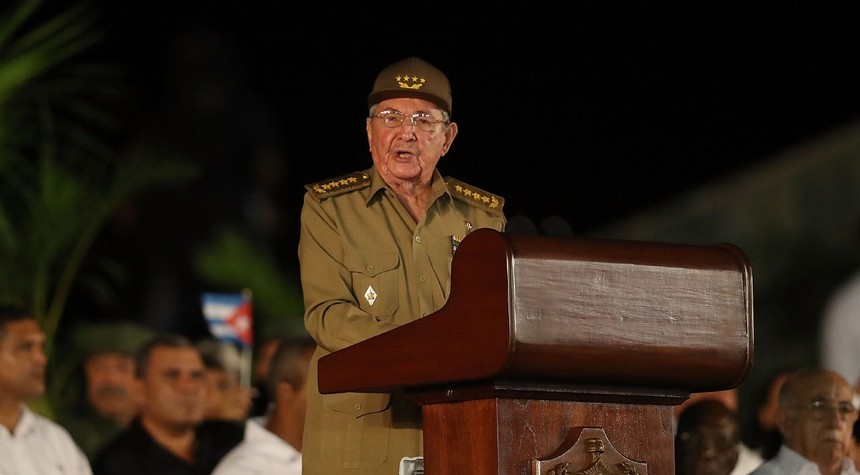
Cuban-American members of Congress are hailing a Florida arrest warrant issued for former Cuban leader Raúl Castro, describing the action as a meaningful step toward accountability for a regime that has evaded justice for decades.
The warrant stems from the 1996 shootdown of two civilian aircraft near Cuba, an incident that claimed four American lives during what was described as a humanitarian operation. Chief Judge Ariana Fajardo Orshan of Florida’s 11th Judicial Circuit determined there exists probable cause to believe Castro conspired to commit first-degree murder in connection with the deaths of Carlos Costa, Pablo Morales, Mario de la Peña, and Armando Alejandre Jr.
Representative Carlos Giménez of Florida, the only Cuban-born member of Congress, characterized the moment as deeply personal. For decades, the Castro regime has maintained control over Cuba while systematically avoiding responsibility for actions taken against both its own citizens and those who fled the island nation. The warrant represents what Giménez called a “powerful message” in the ongoing pursuit of justice.
What makes this development particularly significant is its unprecedented nature. No previous administration has taken such a step, according to Giménez, who expressed gratitude on behalf of the Cuban-American community. For millions who have endured the hardships of communist rule, including those forced into exile, this warrant carries symbolic and practical weight in a struggle that has spanned generations.
Florida Attorney General James Uthmeier characterized Castro’s alleged actions as “premeditated, state-sanctioned murder” carried out in cold blood against four Floridians. The language used by Uthmeier’s office leaves little room for ambiguity regarding the nature of the charges. This represents a step toward accountability for what officials describe as a conspiracy that resulted in the deliberate killing of civilians engaged in humanitarian work.
The practical implications of the warrant extend beyond symbolic value. According to Uthmeier’s office, the warrant could restrict Castro’s ability to travel to nations maintaining extradition agreements with the United States. While the likelihood of Castro facing trial in Florida remains uncertain given the complex nature of international law and diplomatic relations, the warrant establishes a legal framework that did not previously exist.
Representative Giménez emphasized that while the warrant marks a historic development, it represents only one step in a longer journey. The congressman and his colleagues have pledged to continue their efforts until Cuba’s political prisoners are released and the Cuban people can determine their own future without interference from an authoritarian government.
The shootdown of the two Miami-based civilian aircraft in 1996 occurred during a period of heightened tensions between Cuba and the United States. The incident drew international condemnation at the time and led to increased economic sanctions against the island nation. However, criminal charges against Cuban leadership for the incident represent new territory in the relationship between the two countries.
The timing of this warrant coincides with what some Cuban-American lawmakers describe as a pivotal moment for Cuba. Economic hardships on the island have intensified, and signs of civil unrest have emerged in recent years. Whether this legal action will influence conditions on the ground in Cuba remains to be seen, but for those who remember the events of 1996, the warrant offers a measure of recognition that justice, however delayed, has not been forgotten.
Related: Oil Prices Surge Past $110 Per Barrel as Iran Conflict Intensifies