
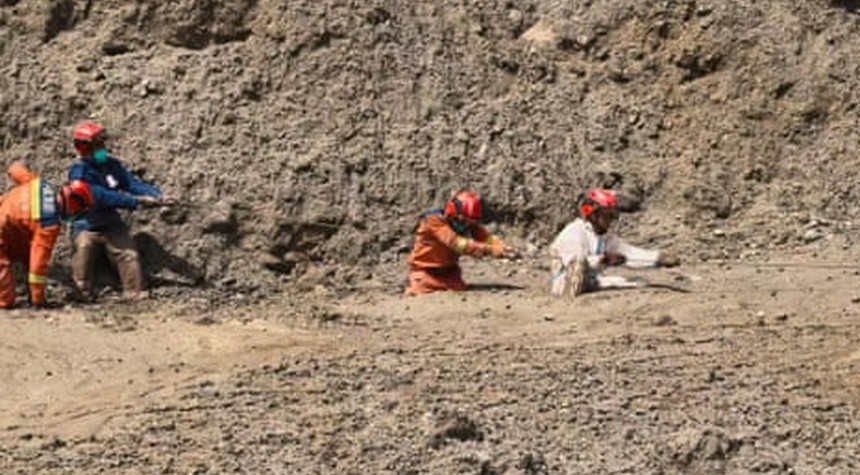
Nearly one week has passed since catastrophic flooding struck the Nepal-China border region, and rescue teams report that the area where most missing Australians were last known to be has been entirely obliterated.
The facts are sobering. Forty-three Australians remain unaccounted for following the disaster, with at least 33 of them believed to have been near Gyirong Port, the border crossing between Nepal and China, at the moment the floods struck. The area, which bore the initial impact, has been buried under meters of silt and debris. Chinese rescue teams arriving by helicopter and on foot have documented complete destruction. The immigration building, power infrastructure, and all surrounding structures have been swept away.
The missing Australians were traveling in organized groups. Fifteen were with the Himalaya Glacier Company, eleven with the Isha Foundation, six from Kailash Journeys, and one from Kathmandu Holiday Tours and Travel. Many had arrived at the immigration building merely ten minutes before the floodwaters hit.
For families who have traveled to Kathmandu to wait for news, Monday brought a brief surge of hope when word spread that phone connectivity to the region had been restored. One woman, who requested anonymity, spent the morning attempting to reach her husband. He did not answer. Her frustration extended beyond the natural disaster itself. “The embassies are not helping,” she stated plainly.
Sujan Wasti, who heads Nepal operations for Kailash Journeys, last heard from his group at 7:30 in the morning when their guide made contact to report they were returning. They had been scheduled to reach Kathmandu on Thursday, with international flights home arranged from the capital.
“In the area, the rescue has been done,” Wasti said. “Now, it will just be about collecting the bodies and bringing them home.”
His teams have conducted extensive search operations since the disaster struck last Wednesday. They have dispatched personnel along the Trishuli River, flown helicopter reconnaissance missions over the border region twice, and checked local hospitals for any survivors who might have appeared. The results have been uniformly negative.
“We are searching every place we can, but still we have not found anyone,” Wasti reported. “Along the border, it was only dead bodies. If they are alive, it will be a miracle.”
China has assumed coordination of search and rescue operations in the affected zone. As of Monday morning, crews working to reopen the highway toward the port from the Tibet side had approximately 1.15 kilometers of roadway remaining to clear and reconstruct. Access to the area has been severely restricted since Friday, limited exclusively to rescue personnel. Some have hiked ten hours to reach the site before rappelling into the valley. Others have been transported by helicopter when weather conditions permitted.
The operational challenges facing rescue teams underscore the magnitude of the destruction. Where roads once existed, there is now only debris fields measured in meters of depth. Where buildings stood, there is nothing.
Akhilesh Surjan, who specializes in humanitarian emergency and disaster management at Charles Darwin University, has noted that rescue operations have reached a critical juncture. Among the sensitive questions now being confronted is how long hope can reasonably be maintained.
That is the reality facing families gathered in Kathmandu, monitoring WhatsApp groups and Facebook updates, calling phone numbers that ring without answer, and waiting for news that grows less likely to be good with each passing day.
Related: Trump Administration Expands Deportation Program to Eight African Nations