
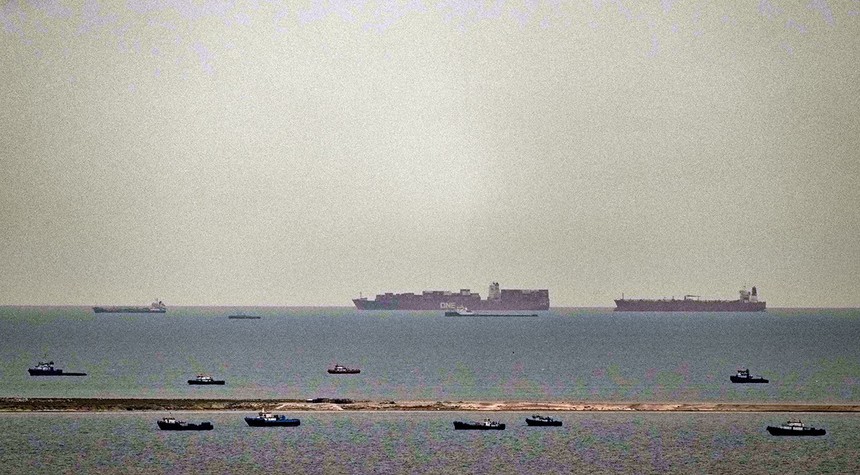
The world’s most critical oil shipping lane remains sealed tonight as Iranian Revolutionary Guard forces continue firing on commercial vessels attempting passage through the Strait of Hormuz. Hundreds of tankers sit stranded on both sides of the narrow waterway, their crews growing increasingly desperate as the standoff enters its second week.
President Donald Trump, speaking from the Oval Office, confirmed that United States naval forces will maintain their blockade of Iranian ports in response to Tehran’s closure of the strait on April 18. The President made clear that American military assets, including guided-missile destroyers, will remain positioned to enforce the blockade until Iran reopens the international waterway.
The facts of this crisis are stark and consequential. Approximately one-fifth of the world’s oil supply normally passes through this 21-mile-wide channel separating Iran from the Arabian Peninsula. Under international law, specifically the United Nations Convention on the Law of the Sea, the Strait of Hormuz is designated an international waterway through which ships possess the right of transit passage. Iran’s closure represents a direct challenge to this established legal framework.
Reports from maritime operations centers paint a troubling picture of conditions on the water. Iranian gunboats opened fire on a tanker on April 18, the same day the closure took effect. A projectile struck a container vessel, damaging cargo. Audio recordings captured by maritime monitoring organizations document the moment crews came under fire, including desperate radio communications from a vessel called the Sanmar Herald.
“Sepah Navy! Motor tanker Sanmar Herald! You gave me clearance to go… you are firing now. Let me turn back!” a crew member can be heard pleading in the recording. Iranian state media has confirmed that warning shots were fired to force vessels to retreat.
The human dimension of this crisis grows more acute with each passing day. Hapag-Lloyd, the world’s fifth-largest container shipping company, reports that its crisis management teams have been working continuously since Friday to extract their vessels and crews from the region without success. Six of their ships remain anchored near Dubai, their crews describing mounting frustration and impatience.
Senior company officials acknowledge that such events can easily lead to traumatic experiences for crew members. The added threat of sea mines has made obtaining insurance for vessels attempting passage through the strait nearly impossible, further complicating any resolution.
India’s Ministry of External Affairs has expressed deep concern over the situation, reflecting the global nature of this crisis. The British Maritime Trade Operations center continues monitoring the situation closely as crews remain trapped aboard their vessels.
The strategic implications extend far beyond the immediate region. Global energy markets face significant disruption as long as this vital artery remains closed. The longer this standoff continues, the greater the pressure on world oil supplies and the economies that depend upon them.
What remains uncertain is how this crisis will resolve. Iran shows no indication of reopening the strait while American naval forces maintain their blockade of Iranian ports. Commercial shipping companies work frantically to secure the safety of their crews while the world watches and waits.
And that is the way it is this evening, as hundreds of merchant sailors remain stranded in the Persian Gulf, caught between competing powers in a standoff that affects us all.
Related: Container Ship Struck in Strait of Hormuz Amid Conflicting Claims Over Waterway Status