
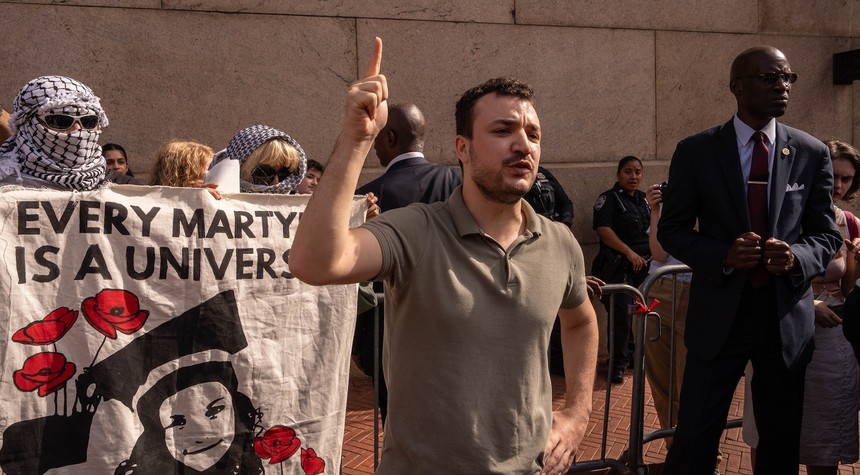
The Supreme Court now faces a case that tests the boundaries between immigration enforcement authority and constitutional protections for free speech.
Mahmoud Khalil, a former Columbia University graduate student and green card holder, has petitioned the nation’s highest court after federal authorities detained him for more than one hundred days and initiated deportation proceedings. The case raises fundamental questions about when and how immigrants may challenge government actions they claim violate their constitutional rights.
The facts are straightforward. Federal agents arrested Khalil in New York City in March 2025. Secretary of State Marco Rubio subsequently signed a determination stating that Khalil’s pro-Palestinian activities “compromise a compelling U.S. foreign policy interest.” Khalil, who is married to an American citizen, spent more than three months in Immigration and Customs Enforcement custody before being released pending the resolution of his legal challenges. He has not been charged with any crime.
A divided federal appeals court ruled that Khalil cannot litigate his constitutional claims until immigration proceedings against him conclude. This presents a practical difficulty: if deportation occurs before the courts resolve his case, the question of whether his rights were violated may never receive judicial scrutiny.
Khalil contends that the Trump administration deliberately targeted him as part of a broader effort to suppress pro-Palestinian speech on college campuses. His legal team argues this represents an unprecedented weaponization of immigration authority to silence political dissent.
The government presents a different account. White House spokeswoman Lauren Bis stated that Khalil obtained his visa through deception, willfully failing to report relevant background information. The administration maintains it possesses the authority to protect national interests through immigration enforcement.
The legal principles at stake are significant. The case centers on habeas corpus, the centuries-old procedure allowing detained individuals to challenge their confinement before a judge. If the Supreme Court accepts the case and rules that Khalil may access this procedure, his claims of retaliation for protected speech can proceed to adjudication. If the court declines to hear the appeal, deportation could occur before those claims receive consideration.
Khalil’s attorney, Baher Azmy, argues that his client has never committed a crime and faces removal solely because of speech the government finds objectionable. The case, Azmy contends, presents an egregious example of constitutional overreach that demands judicial review.
A separate legal challenge filed by Khalil remains pending before the Fifth Circuit Court of Appeals, focusing on immigration law rather than constitutional questions.
During a press conference Monday, Khalil characterized the case as extending beyond his individual circumstances. He expressed concern for thousands of other immigrants who lack the resources to mount similar legal challenges.
The Supreme Court has not yet indicated whether it will accept the case for review. The justices receive thousands of petitions annually and grant full hearings to fewer than one hundred. Their decision on whether to hear Khalil’s appeal will determine not only his fate but potentially establish precedent affecting how immigrants may challenge government actions they believe violate their constitutional rights.
The outcome will clarify the intersection of immigration enforcement powers and First Amendment protections, questions that affect both the scope of executive authority and the practical application of constitutional guarantees to non-citizens lawfully present in the United States.
Related: Zelenskyy Claims United States Withholding Vital Intelligence During Russian Attacks