
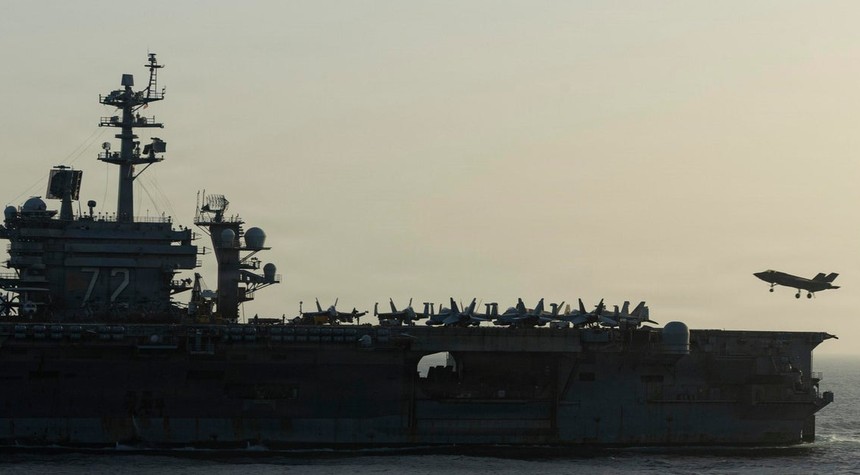
A United States Navy sailor serving aboard the USS Abraham Lincoln in the Middle East learned this weekend that federal immigration officials had arrested his father in Florida, marking another instance of immigration enforcement affecting American military families.
Joshua Aviles, nine months into his deployment aboard the aircraft carrier, received word that his father, Luis Manuel Aviles Roa, had been detained by Border Patrol during a traffic stop in Key West on Saturday. The younger Aviles shared his distress publicly, describing his father as a hardworking man without criminal history and expressing concern about maintaining his mental focus while working extended shifts at sea.
The Department of Homeland Security confirmed the arrest, stating that Aviles Roa, a Nicaraguan national, had entered the United States illegally and now faces deportation proceedings while in Immigration and Customs Enforcement custody. The department acknowledged the family’s assertion that the detained man has no criminal record but emphasized that military family connections do not exempt individuals from immigration law.
“Having a family member in the military is not a free pass to violate our nation’s laws,” the department stated Sunday. “We are simply enforcing the laws passed by Congress. This Administration does not pick and choose which laws to enforce.”
This case represents a continuation of immigration enforcement actions involving military families that have become notably more frequent during the current administration. Previously rare, such arrests have increased following the rescission of prior limitations on immigration enforcement operations. The Trump administration’s mass deportation campaign has made clear that all individuals in the country illegally remain subject to arrest and deportation proceedings, regardless of familial connections to military service.
The timing presents particular hardship for the sailor, who noted the extended nature of his deployment and the conditions aboard the Lincoln. The aircraft carrier and its approximately 5,000 crew members departed the Middle East last week, beginning a journey home that will require several weeks to complete. The vessel has been the subject of reports concerning mental health challenges and substandard conditions faced by service members during this prolonged deployment.
The intersection of immigration enforcement and military service raises complex questions about how the nation treats families connected to those who defend it. While administration officials maintain they are faithfully executing immigration laws as written by Congress, cases like this one highlight the human cost of strict enforcement policies.
For Aviles, serving his country thousands of miles from home while his father sits in detention awaiting possible deportation, the situation presents an acute personal crisis. His concerns about maintaining his focus while working twelve-hour days at sea underscore the broader implications of enforcement policies that do not distinguish between those with criminal records and those whose only violation is unlawful presence.
The case will proceed through immigration courts while the sailor continues his duties aboard ship, a stark reminder that even those serving in America’s armed forces are not insulated from the far-reaching effects of the administration’s immigration enforcement priorities.
Related: Chinese Humanoid Robots Surpass Human Athletic Records at Beijing Competition