
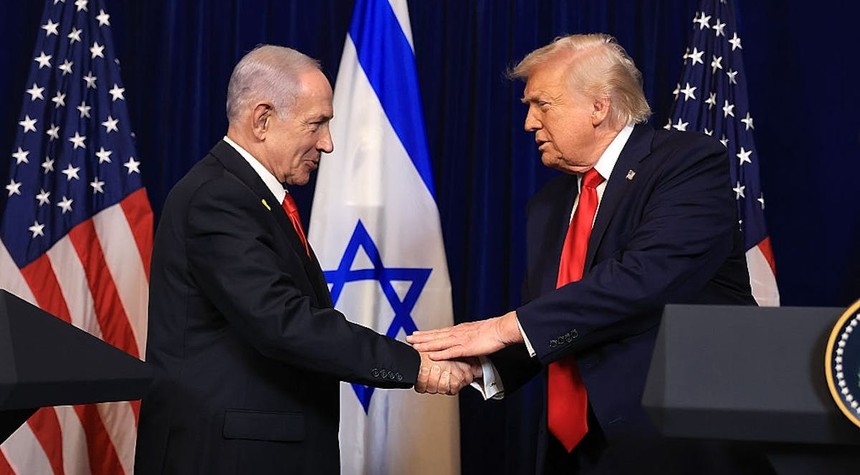
Israeli Prime Minister Benjamin Netanyahu has publicly dismissed suggestions of deteriorating relations with the Trump administration, characterizing the alliance between the two leaders as fundamentally sound despite substantive policy disagreements.
In a recent television interview, Netanyahu directly addressed growing speculation about tensions between Jerusalem and Washington, particularly regarding the administration’s consideration of advanced weapons sales to Turkey. The Israeli leader’s comments come at a moment when the strategic landscape of the Middle East continues to shift, with implications reaching far beyond the region’s traditional boundaries.
“He said it couldn’t be better,” Netanyahu stated, referring to President Trump’s own characterization of their working relationship. “Friends can have agreements and disagreements.”
The most significant point of contention involves the Trump administration’s deliberations over selling F-35 fighter jets to Turkey, a NATO ally that has increasingly charted an independent course in regional affairs. The administration has also indicated willingness to lift existing sanctions on Ankara, a move that has generated concern among Israeli security officials who view Turkey’s current government with considerable wariness.
Netanyahu did not mince words about his position on the proposed arms transfer. “I think this is not a good thing,” he said, while emphasizing that he has communicated these concerns directly to President Trump through private diplomatic channels rather than public criticism.
The Israeli prime minister’s approach reflects a calculated diplomatic strategy. By acknowledging disagreements while simultaneously affirming the strength of the bilateral relationship, Netanyahu seeks to preserve Israel’s most critical alliance while protecting what he views as essential security interests.
“What I’m telling you, I say to my friend, Donald Trump, the president of the United States, in private conversations. It’s not that I’m hiding it,” Netanyahu explained. This transparency, he argued, demonstrates the maturity and resilience of the US-Israel partnership rather than its fragility.
Netanyahu framed these policy disagreements within a broader philosophical context about the nature of democratic governance. He drew a sharp distinction between the open debate characteristic of democratic societies and the suppression of dissent common in authoritarian regimes.
“We’re a robust democracy, too,” Netanyahu said of Israel. “I never lose sight of the fact that it is the ability to have disagreements that marks a free country.”
The prime minister specifically contrasted the American and Israeli systems with those of Iran and Turkey, nations where political opposition faces systematic repression. This comparison served both as a defense of the current disagreement and as a reminder of shared values that transcend temporary policy differences.
“That’s not the American way, and it’s not the Israeli way,” he stated. “Thank God we have our two democracies to continue the tradition of freedom and open discourse.”
The question of F-35 sales to Turkey carries significant strategic implications. The advanced fighter aircraft represents the pinnacle of American military aviation technology, and its transfer to any nation requires careful consideration of long-term security consequences. For Israel, which has relied on qualitative military superiority to offset numerical disadvantages in a hostile region, the prospect of sophisticated American weaponry in Turkish hands presents a legitimate security concern.
And that is the way it is.
Related: Australian and Solomon Islands Leaders Challenge Beijing Over ICBM Launch