
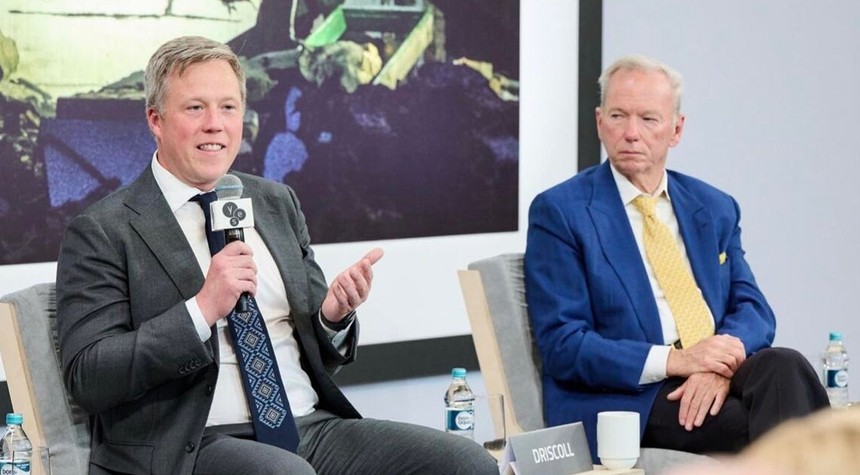
KYIV — In what marks a sobering assessment of American military readiness, former Secretary of the Army Dan Driscoll emerged from his departure from the Trump administration to deliver a stark warning about the state of modern warfare. Speaking at the Yalta European Strategy forum, Driscoll declared that the world’s major military powers have failed to match the pace of innovation demanded by contemporary conflict.
The venue itself carried symbolic weight. The annual conference, organized to examine Ukraine’s integration into Western security structures, brought together ministers, generals, and legislators from Ukraine, Europe, and the United States. Driscoll appeared alongside Eric Schmidt, the former Google chief executive who now leads Perennial Autonomy, an American defense firm operating extensively in Ukraine.
The central thesis of Driscoll’s remarks centered on a Ukrainian innovation that appears to surpass American capabilities. He praised a Ukrainian software platform designated “DELTA,” which provides military commanders with an integrated view of battlefield conditions by synthesizing data from radars, sensors, and individual soldiers. According to Driscoll, this technology exceeds anything currently fielded by the United States military.
The implications are profound. Driscoll, an Iraq War veteran and former venture capitalist, suggested that as Ukraine expands its processing capabilities and artificial intelligence systems, the nation possesses an opportunity to decisively outmaneuver Russian forces through technological superiority.
This assessment carries particular weight given Driscoll’s recent tenure. During his eighteen months as Army Secretary, he participated directly in the administration’s efforts to negotiate terms for ending Russia’s war against Ukraine. His resignation was announced in late August amid reported disagreements with Defense Secretary Pete Hegseth concerning senior officer removals and Army modernization priorities. The White House offered no official explanation for his departure.
The practical consequences of America’s innovation deficit became apparent during recent hostilities with Iran. When Driscoll recognized the absence of adequate defenses against Iranian Shahed drones, solutions came not from established American defense contractors but from Schmidt’s Perennial Autonomy. The company rapidly delivered 13,000 “Merops” interceptor drones and 10,000 “Bumblebee” reconnaissance and strike drones, both systems extensively deployed in Ukraine.
Schmidt’s response to Driscoll’s urgent request was immediate. Yet Schmidt himself posed the more troubling question: Could the government not have anticipated this requirement through proper multi-year planning?
The disparity in production capacity illuminates the scope of the challenge. While the United States projects procurement of approximately 300,000 drones this year, Ukraine intends to manufacture 7 million units. This represents not merely a quantitative gap but suggests a fundamental difference in approach to modern warfare.
Driscoll emphasized the necessity of adopting what he termed Ukraine’s “scrappy, fast, iterative” methodology. During his time as Army Secretary, he championed procurement reforms designed to accelerate weapons delivery to frontline soldiers. These reforms began implementation in January.
The audience at the forum, comprising security officials and legislators from multiple nations, received these observations with evident concern. The facts speak plainly: allies engaged in active conflict have developed capabilities that exceed those of the United States, while American procurement systems struggle to adapt to the realities of modern warfare.
This represents more than a technical challenge. It raises fundamental questions about American military preparedness and the capacity of existing defense structures to respond with the speed contemporary threats demand. That these warnings come from an official who recently departed the administration under contentious circumstances only amplifies their significance.
Related: Anthropic and OpenAI Leaders Warn Artificial Intelligence Advancing Too Rapidly