
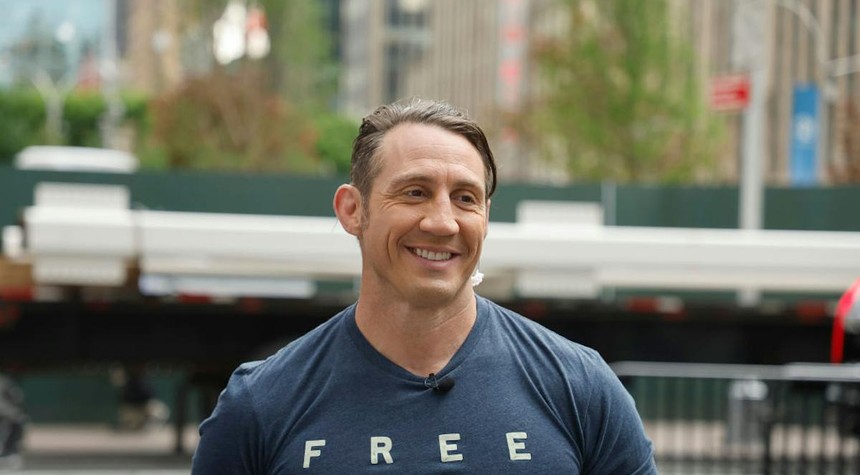
Former Army Green Beret and mixed martial arts fighter Tim Kennedy is recovering at Walter Reed National Military Medical Center after sustaining three gunshot wounds to his leg during an ambush in the Democratic Republic of Congo on September 17. The attack on a private security team left approximately twenty people dead or wounded in what appears to be one of the most significant setbacks for Western private military operations in the volatile region.
Kennedy, forty-seven, was working with Vectus Global, the private security and consulting company founded by Erik Prince, who previously established the now-defunct Blackwater firm. The ambush killed at least seven Congolese personnel and Justin Conaglen, a former member of New Zealand’s elite Special Air Service. Conaglen’s remains have been returned to New Zealand, where military officials are assisting his family with funeral arrangements.
The circumstances surrounding the attack remain under investigation, but sources with direct knowledge of the incident suggest a level of sophistication that points beyond typical rebel capabilities. Multiple sources have indicated possible involvement by Rwandan military forces, which are believed to support the M23 rebel movement operating in eastern Congo. One source suggested the attackers may have tracked a surveillance drone back to the security team’s position. The Rwandan government has consistently denied providing support to M23 rebels and did not respond to requests for comment on these allegations.
Vectus Global has declined to provide detailed information about the ambush. The company has taken on an expanded role supporting the Congolese government in the eastern provinces, where conflict has been driven substantially by competition for control over the region’s extraordinary mineral wealth, including gold, tantalum, and lithium.
Prince’s mandate in the Congo initially focused on improving revenue collection from the country’s mineral reserves. However, his personnel were subsequently deployed in direct support of Congolese army operations in South Kivu province, including around the strategic city of Uvira. American officials have stated that the United States government does not maintain a contract with Prince’s company in Congo, though discussions regarding potential cooperation in Haiti have reportedly taken place.
The incident highlights the continuing role of private military contractors in African conflicts, particularly in resource-rich areas where state authority remains contested. The Congo’s eastern provinces have experienced decades of instability, with numerous armed groups competing for territorial control and access to valuable minerals that feed global supply chains for electronics and other industries.
Kennedy built a public profile through both his military service and his mixed martial arts career, compiling an eighteen and six professional fighting record. However, his reputation within the veteran community has become increasingly contentious, with former colleagues challenging numerous combat accounts presented in his memoir.
The September attack represents a significant escalation in the dangers facing private security personnel operating in the region. The combination of sophisticated tactics and the high casualty count suggests that whatever forces conducted the ambush possessed substantial military capability and intelligence. As Kennedy receives treatment at one of America’s premier military medical facilities, questions remain about the future of private military operations in the Congo and the broader implications for Western involvement in Central African conflicts.
Related: Trump Calls for Zelenskyy’s Removal After Ukraine Criticizes Russian Diesel Agreement