
The war in Ukraine extended deeper into maritime domains this week as Russian President Vladimir Putin threatened to seize European commercial vessels in response to any European action against Russian merchant ships, while Ukraine conducted a substantial drone attack on a critical Russian Black Sea port facility.
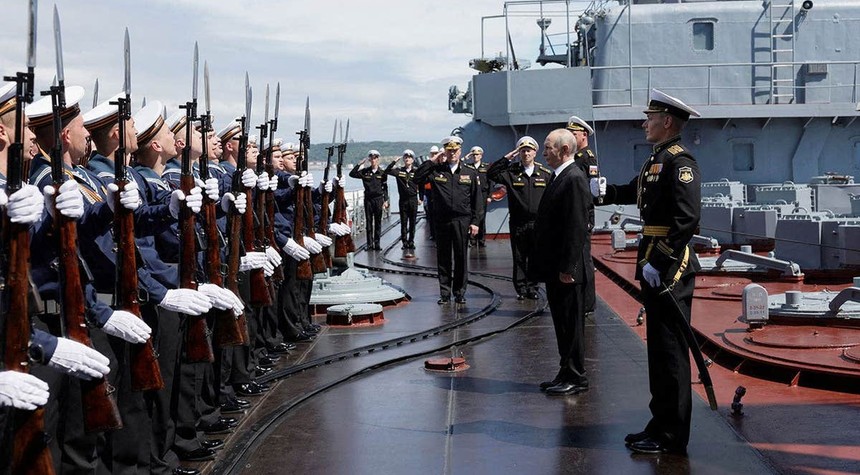
The Russian leader issued his warning Wednesday as Moscow conducted large-scale naval exercises across the Sea of Japan, the Sea of Okhotsk, and the Northwest Pacific. More than 13,000 troops participated in the drills, supported by dozens of ships, submarines, and aircraft in a demonstration of Russian naval capabilities far from the Ukrainian theater.
These developments illuminate an expanding maritime dimension to the conflict. Ukraine continues to strike at Russian naval infrastructure and commercial facilities along the Black Sea, while Moscow signals its willingness to escalate tensions with European nations and projects power across Pacific waters.
Ukrainian forces launched a major overnight assault on Novorossiysk, a vital Russian port city that serves dual purposes as a commercial export hub and naval base. The attack employed drone swarms that successfully disabled two significant grain terminals, according to Russian industry sources. The port has assumed increased strategic importance for Moscow after Ukrainian forces compelled Russia to relocate Black Sea Fleet assets from Crimea through persistent attacks on naval facilities there.
Ukrainian President Volodymyr Zelenskyy acknowledged responsibility for the operation Wednesday morning, characterizing Novorossiysk as “the last major stronghold of the Russian fleet in the Black Sea.” The Ukrainian leader detailed the weapons systems employed in the strike, including Palianytsia jet-powered drones, Neptune missiles, and unmanned naval platforms. Ukrainian forces reportedly struck air defense installations, pier facilities, and port infrastructure.
The attack on Novorossiysk represents a continuation of Ukraine’s strategic campaign to degrade Russian naval capabilities and disrupt Moscow’s ability to export commodities through Black Sea channels. By targeting both military and commercial infrastructure, Ukrainian forces aim to impose economic costs on Russia while diminishing its capacity to project naval power in the region.
Putin’s threat against European shipping emerged against this backdrop of Ukrainian success in the maritime domain. The Russian president’s warning appears designed to deter European nations from implementing measures against Russian commercial vessels, though the practical implications of such threats remain unclear.
The simultaneous Pacific naval exercises demonstrate Moscow’s determination to maintain a global military presence despite the demands of the Ukrainian conflict. The deployment of substantial forces across multiple Pacific maritime zones signals to regional powers, particularly the United States and its Asian allies, that Russia retains the capacity for power projection beyond the immediate war zone.
These parallel developments, while not directly connected operationally, reveal the conflict’s expanding scope. What began as a land war in eastern Ukraine now encompasses naval operations across the Black Sea, threats to international shipping, and military exercises spanning from European waters to the Pacific Ocean.
The international community watches these maritime escalations with concern, as disruptions to shipping lanes and threats against commercial vessels carry implications far beyond the immediate combatants. The global economy depends upon secure maritime trade routes, and any significant interference with international shipping could produce consequences extending well beyond the Black Sea region.
Related: Women’s Rights Crisis Deepens Across Afghanistan and Iran Under Authoritarian Rule