
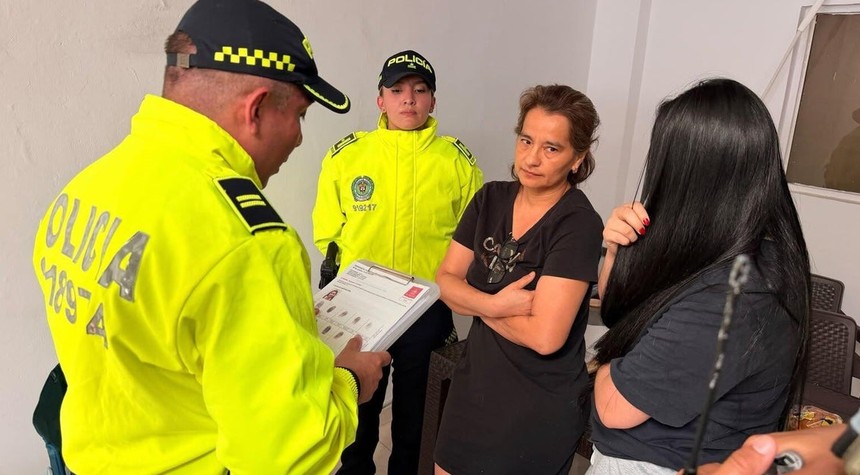
Colombian authorities have arrested the wife and daughter of Adolfo Macias, known by his alias “Fito,” one of Ecuador’s most powerful drug traffickers who was extradited to the United States last year. The operation represents a significant development in the ongoing effort to dismantle the financial networks that sustain transnational criminal organizations in Latin America.
President Abelardo de la Espriella announced the arrests Sunday, identifying the suspects as Inda Mariela Penarrieta Tuarez and Michelle Jamileth Macias Penarrieta. The operation, conducted in northeastern Colombia, involved cooperation between Colombian police, the Federal Bureau of Investigation, and Ecuadorian authorities.
Both women face money laundering charges in Ecuador. According to President de la Espriella, Ecuadorian investigators believe the suspects utilized shell companies to process illicit proceeds for Los Choneros, the criminal organization Macias leads. The gang has established documented connections to Mexico’s Sinaloa cartel, one of the hemisphere’s most powerful drug trafficking organizations.
“Colombia will not be a refuge for the finances of transnational crime,” President de la Espriella stated, pledging to extradite the women to face justice in Ecuador. Ecuadorian President Daniel Noboa responded positively to the cooperation, emphasizing the effectiveness of coordinated international law enforcement efforts.
The arrests follow a dramatic sequence of events that began in January 2024, when authorities discovered Macias missing from his prison cell in Quito. At the time, he was serving a 34-year sentence for drug trafficking and murder. His escape prompted Ecuador to declare a 60-day state of emergency, reflecting the serious security threat his organization poses to the nation.
Following his recapture and subsequent extradition to the United States, Macias now faces seven charges in a New York federal court, including drug trafficking and arms trafficking. The charges carry potential sentences ranging from twenty years imprisonment to life. He has entered a plea of not guilty. The United States designated Los Choneros as a terrorist organization last year, a classification that enables enhanced prosecution tools and international cooperation.
Ecuador itself has designated Los Choneros among twenty criminal gangs classified as terrorist organizations under national law. This classification reflects the country’s dramatic security deterioration in recent years.
The nation, once regarded as among Latin America’s safest, has transformed into a critical cocaine transit corridor. Positioned between Colombia and Peru, the world’s leading cocaine producers, Ecuador provides criminal organizations with strategic access to international shipping routes. Mexican cartels have cultivated partnerships with local Ecuadorian gangs, who now wage violent territorial conflicts for control of ports and maritime transportation networks.
The reach of Los Choneros extends beyond traditional drug trafficking. Last September, Ecuadorian authorities arrested Dario Penafiel, known as “Topo,” one of the organization’s senior lieutenants, in Ecuador’s Amazon region. Investigators believe he was coordinating illegal mineral extraction operations, demonstrating how these criminal networks diversify their revenue streams.
This arrest underscores the necessity of international cooperation in confronting transnational organized crime. As criminal networks expand across borders and into legitimate economic sectors through money laundering, no single nation can effectively combat these threats in isolation. The successful collaboration between Colombian, Ecuadorian, and American law enforcement agencies in this operation provides a model for future efforts to restore security and the rule of law throughout the region.
Related: Spain Confronts Growing Housing Crisis as Disabled Woman Loses Home of Seven Decades