
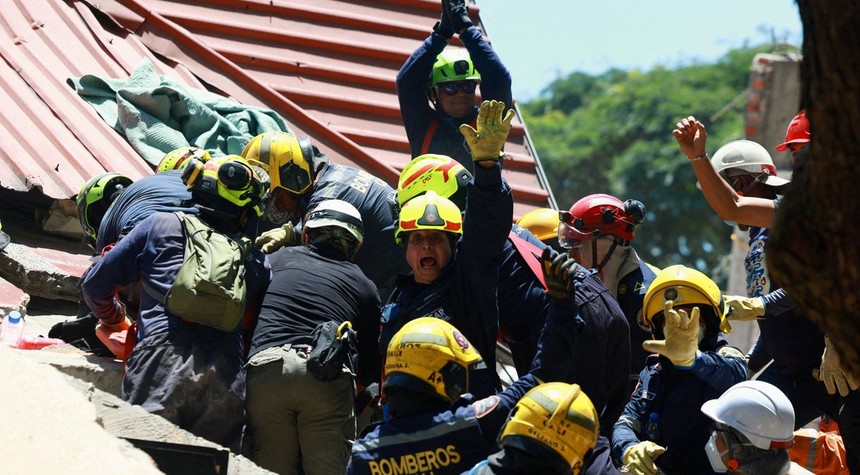
Colombia faces a mounting humanitarian crisis as rescue workers race against time to locate survivors of the strongest earthquake in the nation’s recorded history. The 7.4 magnitude tremor struck the country’s western region shortly after 7:30 Monday morning, leaving at least 181 dead, 1,595 injured, and as many as 195 officially missing, according to President Abelardo de la Espriella.
The true scope of the disaster may be considerably larger. Civilian databases tracking missing persons suggest the number could reach 3,900, as desperate families turn to social media seeking information about loved ones whose fates remain unknown.
The material damage is extensive. More than 1,100 homes have been completely destroyed, with an additional 8,300 sustaining significant damage. In the hardest-hit city of Pereira, home to over half a million residents, electricity has been almost entirely lost. Many citizens spent Monday night sleeping in the streets, either because their homes were no longer safe or out of fear that deadly aftershocks might strike while they slept.
The scenes emerging from Pereira paint a picture of a city in crisis. Volunteers and professional rescue workers alike have been clearing rubble by hand, forming human chains to remove bricks and masonry from collapsed structures. Every few minutes, these crews pause their work to listen for any signs of life beneath the debris.
“It’s so sad to see the whole city like this, knowing that there may still be people alive under there,” said Juana Marin, a 25-year-old volunteer working at the site of a collapsed six-story building where two girls were believed trapped.
The earthquake struck with little warning, sending panicked residents fleeing into the streets. At Pereira’s airport, ceiling panels collapsed on travelers seeking shelter, captured in videos showing people running through debris amid scenes of chaos.
President de la Espriella, who had been in office for only three days when disaster struck, moved quickly to declare a state of emergency and mobilize a coordinated rescue effort. Hospitals in five Colombian cities were placed on red alert, and authorities in Cali imposed a nighttime curfew to maintain order and facilitate rescue operations.
The human stories emerging from the rubble underscore both the tragedy and the resilience of the Colombian people. Andres Felipe Mejia joined a makeshift rescue crew working at a collapsed building in Cali. “One of the rescuers asked anyone trapped to whistle, and someone whistled back,” he recounted. “They pulled out a man and a baby, but the wife is still in there.”
Gloria Giraldo, a 38-year-old housewife whose neighborhood sustained severe damage, captured the uncertainty facing thousands when she said, “Since yesterday we’ve been wondering what will become of our lives.”
As night fell Monday, volunteers continued searching through darkened streets with torches, navigating a city without power. “We’re without power. This seems honestly like a zombie city,” said resident Juan David Gaitan, describing the eerie conditions in Pereira.
The coming days will prove critical as rescue workers continue their urgent search for survivors. With each passing hour, the likelihood of finding people alive beneath the rubble diminishes, making the current efforts all the more vital. The international community will be watching closely as Colombia confronts this unprecedented natural disaster and begins the long process of recovery and rebuilding.
Related: Australian Government Targets Endangered Species in New Bird Flu Response