
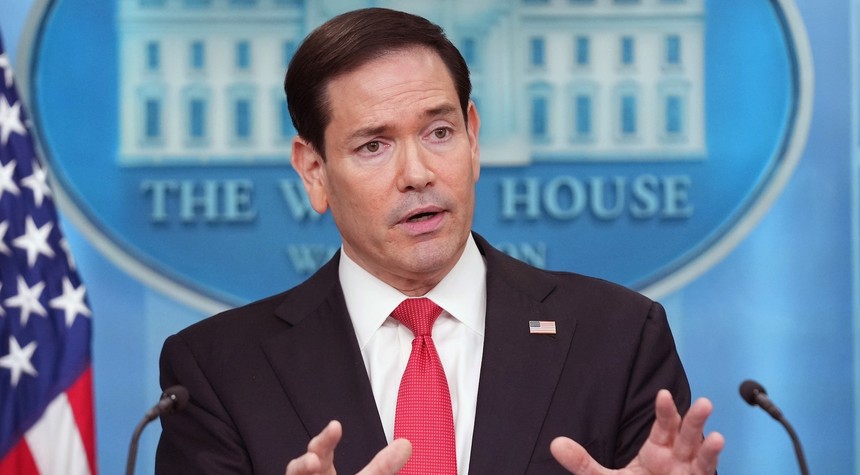
Secretary of State Marco Rubio announced from the White House briefing room that Operation Epic Fury, the military campaign against Iran’s nuclear infrastructure, has concluded after ten weeks of sustained action. The declaration marks a significant shift in the administration’s approach as it pivots toward what officials are calling “Project Freedom” and renewed efforts to secure passage through the strategically vital Strait of Hormuz.
In his first appearance at the briefing room podium as secretary of state, Rubio emphasized the military achievements of the operation while carefully avoiding commitment on whether the United States had secured or eliminated Iran’s nuclear material. When pressed on this central question, given that President Donald Trump’s stated objective has been preventing Iran from obtaining nuclear weapons, Rubio focused instead on what the operation accomplished.
“Their ability to build a shield behind which they could hide their nuclear program was wiped out. That’s a very substantial achievement. And that was the purpose of this operation from Day 1,” Rubio stated.
The secretary’s measured tone represented a notable departure from the president’s more aggressive rhetoric. While Trump has repeatedly threatened additional military action should Iran fail to meet American demands, Rubio stressed that the current military operation has reached its conclusion and that the administration now seeks a diplomatic resolution.
“We’re not cheering for an additional situation to occur. We would prefer the path of peace,” Rubio said. “What the president would prefer is a deal. He would prefer to sit down and work out a memorandum of understanding for future negotiations that touches on all the key topics that have to be addressed; a full opening of the strait so the world can get back to normal.”
The Strait of Hormuz remains a critical concern for global commerce. Approximately one-fifth of the world’s petroleum passes through this narrow waterway, and its closure or restriction has significant implications for international markets and energy security. The administration’s “Project Freedom” initiative appears designed to address this vulnerability while diplomatic efforts proceed.
Rubio acknowledged that negotiations with Iran have encountered difficulties. Trump’s chief negotiators, Steve Witkoff and Jared Kushner, continue working to bring Iranian representatives back to the table, but progress appears uncertain.
“Iran must accept the reality of the situation and come to the negotiation table and accept terms that are good for them, but ultimately good for the world,” Rubio said. He suggested that a genuine diplomatic breakthrough could lead Iran toward “reconstruction, to prosperity, and to stability, and to not posing a threat to the world.”
The question of whether the military campaign truly achieved its primary objective remains unanswered. Rubio declined to confirm whether ending the war requires securing Iran’s nuclear material, stating only that this remains “one of the topics that needs to be discussed.” This ambiguity raises questions about what conditions must be met for the administration to consider its Iran policy successful.
The secretary’s announcement that Operation Epic Fury has concluded and that Congress has been formally notified suggests the administration seeks to establish clear boundaries between the completed military phase and whatever diplomatic or limited operations may follow. Whether this distinction holds, particularly given the president’s tendency toward unpredictable policy shifts, remains to be seen.
The international community watches closely as the United States attempts this transition from military action to diplomatic engagement, with global energy markets and regional stability hanging in the balance.
Related: Canadian Prime Minister Carney Seeks New Alliances at Armenia Summit