
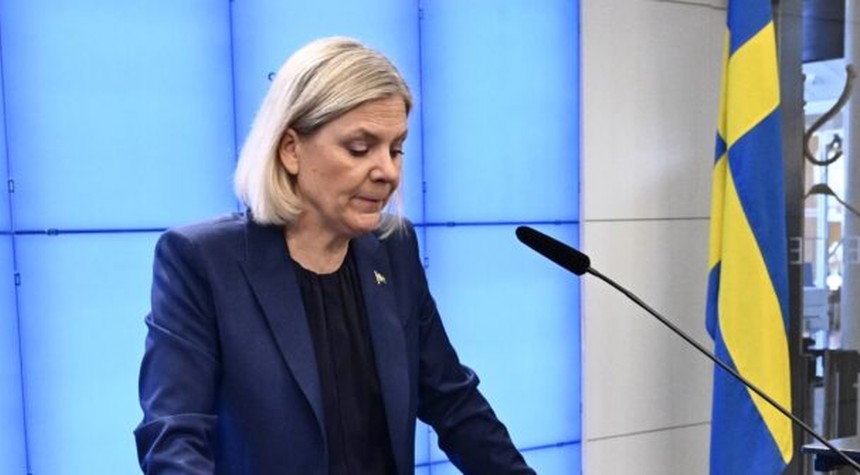
The promising electoral victory of Sweden’s left-wing coalition has disintegrated into political chaos, with former Prime Minister Magdalena Andersson abandoning her mandate to form a new government after coalition partners turned against one another in a bitter struggle for power.
Andersson, who leads the Social Democrats, the largest party in Sweden’s parliament, the Riksdag, announced Monday that she could no longer see a viable path forward to construct a working government. This declaration came less than two weeks after the four left-wing parties secured a narrow victory over the outgoing conservative coalition.
The crisis erupted when the socialist Left Party broke with its coalition partners during Monday’s critical vote for Speaker of the House. In a surprising maneuver, the Left Party backed Andreas Norlén of the centre-right Moderate Party, the same political faction aligned with current Prime Minister Ulf Kristersson’s government. This decision effectively sided the Left Party with the right-wing bloc against the Social Democrats’ preferred candidate, Johanna Haraldsson.
The Left Party defended its decision by arguing that governmental formation requires time, and Norlén’s previous experience presiding over similar political circumstances would provide necessary stability during the transition period. The party positioned its vote as one driven by national interest rather than partisan loyalty.
Andersson responded with barely contained fury, arguing that the largest parliamentary party holds a rightful claim to the Speakership, Sweden’s supreme political position, which technically ranks above even the Prime Minister in the constitutional hierarchy. The former Prime Minister characterized the Left Party’s action as a fundamental breach of political protocol.
At her Monday press conference, Andersson formally returned her exploratory mandate to the Speaker, effectively opening the door for alternative coalition arrangements. She suggested, perhaps with deliberate irony, that a new political alignment might emerge between the socialist Left Party and the centre-right Moderates, while firmly denying that her withdrawal represented mere political theater.
“This is not about a game of increasing pressure, but I can only state that the Left Party has made a choice,” Andersson stated. “They have chosen to cooperate with the Moderates in this. Then I can draw conclusions from that.”
While the Left Party insists its Speaker vote stemmed from altruistic concern for Sweden’s political stability, political analysts suggest more calculated motivations. The far-left party finds itself engaged in a fundamental struggle over its role in any future Social Democrat-led government.
The source of this tension lies with the liberal Centre Party, which holds crucial seats necessary for any left-wing majority. The Centre Party has drawn a firm line, declaring it will refuse to enter any coalition government that grants the Left Party cabinet positions or substantive governing authority. Despite being positioned as the second-largest party on the left, the Left Party’s radical policy positions have proven toxic to potential coalition partners seeking broader appeal.
This political impasse leaves Sweden in uncertain territory. The country now faces the prospect of extended coalition negotiations or potentially new elections if no workable government can be assembled. For a nation long characterized by political stability and consensus-driven governance, the current discord represents a significant departure from established norms.
The situation in Stockholm serves as yet another reminder that electoral victories mean little without the capacity to govern, and that coalition politics require more than vote tallies. They demand compromise, trust, and shared purpose. These qualities appear in short supply among Sweden’s fractured left-wing parties.
Related: United States and China Reach Agreement to Reduce Tariffs on $30 Billion in Trade Goods