
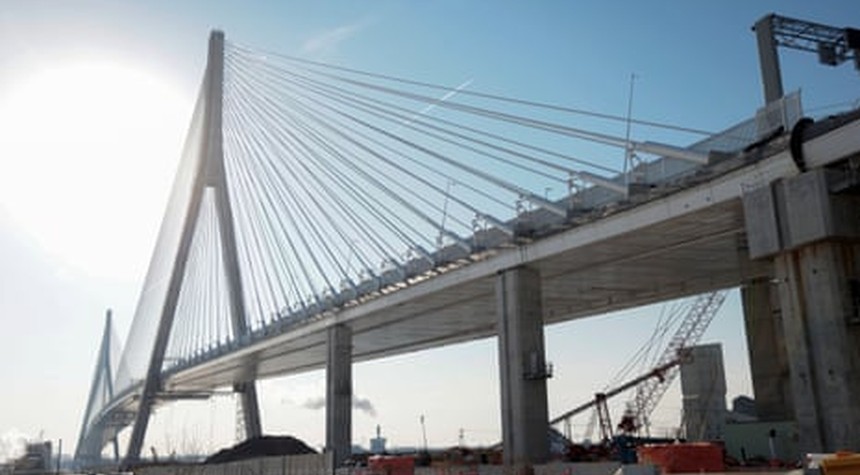
A planned joint ceremony celebrating the opening of the Gordie Howe International Bridge has been canceled following President Trump’s announcement of a 50 percent tariff on most Canadian goods, marking another chapter in deteriorating trade relations between the United States and its northern neighbor.
The bridge, spanning 1.5 miles across the Detroit River and connecting Detroit with Windsor, Ontario, represents years of planning and construction. Its opening ceremony, scheduled for Friday, was intended to symbolize the enduring partnership between two nations that share the world’s longest international border. That symbolism now lies in ruins.
Canadian Infrastructure Minister Gregor Robertson’s office issued a statement making clear the gravity of the situation. “In light of trade action threatened by the United States earlier this week, it would be inappropriate to proceed with a celebratory event between the two countries,” said spokesperson Jenna Ghassabeh.
The president’s tariff announcement cited what he characterized as unfair Canadian discrimination against American automobiles, alcohol, and dairy products. These accusations have escalated tensions with one of America’s most important allies, both economically and strategically.
Canada has announced it will proceed with its own ceremony on Friday. Whether the United States will hold a separate event remains uncertain. Two American officials, speaking on condition of anonymity, indicated they still expect the bridge to open to traffic on July 27, though their confidence has diminished in recent days.
This diplomatic setback follows an already troubled path to the bridge’s completion. A ribbon-cutting ceremony had initially been scheduled for June 12 but was abruptly postponed as officials worked to resolve what were described as “outstanding issues.”
The nature of those issues has become clearer in recent days. Canada financed the bridge’s construction under an agreement allowing it to recover costs through toll revenue. The Trump administration sought changes to that arrangement, and late Tuesday, the Canadian government revealed the terms of the deal after facing criticism from opposition members of parliament.
According to the agreement, Canada will share 50 percent of net bridge and crossing-related revenues with an economic development fund controlled by the United States government. These terms appear to contradict earlier statements by Prime Minister Mark Carney, who said at a July 16 press conference that toll revenues would not be split until Canada was repaid for its investment.
The project, negotiated under former Michigan Governor Rick Snyder, has been under construction for years. Its completion was meant to enhance cross-border commerce and ease congestion at existing crossing points. The Detroit-Windsor corridor represents one of North America’s most important trade arteries, with billions of dollars in goods crossing annually.
The cancellation of Friday’s ceremony serves as a stark reminder that even infrastructure projects designed to bring nations closer together cannot escape the realities of modern trade disputes. What should have been a celebration of cooperation has instead become another casualty of escalating tensions over tariffs and trade policy.
As both nations prepare for separate ceremonies, the question remains whether this bridge, built to connect, will instead stand as a monument to division.
Related: Australia Confronts China Over Submarine Missile Test and Regional Aggression