
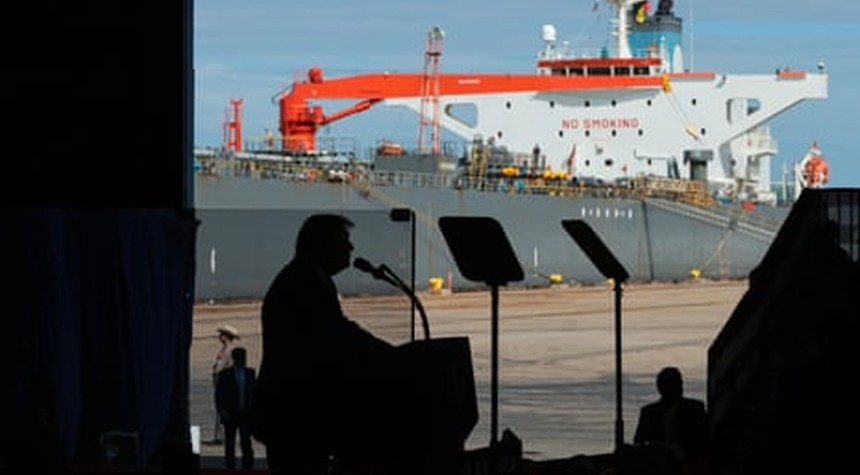
President Donald Trump stood before supporters in Corpus Christi, Texas, on Tuesday to announce what he termed “the greatest oil victory in history,” pointing to an oil tanker offshore that he said carried one million barrels of Venezuelan crude.
The agreement comes nine months after United States forces deposed Venezuelan President Nicolás Maduro in a January operation that saw the long-serving leader captured and transported to New York to face criminal charges. The Trump administration has since worked with Venezuela’s interim government to establish new energy arrangements between the two nations.
“Venezuela will become a prosperous country, and who knows? Maybe some day soon it’ll become a prosperous 51st state,” Trump told the rally crowd. “That’s possible.”
The president has recently discussed acquiring or annexing several territories, including Greenland, Canada, and Mexico, though the Venezuelan comment appears primarily rhetorical given the country’s sovereign status and complex political situation.
Trump characterized the oil deal as covering “billions” of barrels and providing fuel “at zero cost to the American taxpayer.” The timing of this agreement relates directly to economic pressures facing American consumers following the administration’s February decision to engage militarily with Iran. That conflict resulted in Iran’s closure of the Strait of Hormuz, a critical waterway through which approximately twenty percent of global oil supplies transit. The closure triggered nationwide increases in gasoline prices.
“US fuel prices will soon come plummeting down,” the president wrote on his Truth Social platform before taking the stage.
The president framed the Venezuela operation within his broader “Energy Dominance” strategy, writing that he has made the Western Hemisphere “the Energy Capital of the World” by “unleashing” energy production “from Alaska, all the way down to Venezuela.”
However, the administration faces criticism regarding its approach to Venezuela’s post-Maduro transition. Skeptics note that no elections have been scheduled in the South American nation since Maduro’s removal, raising questions about whether the Trump administration has prioritized energy access over democratic institution-building. The interim government currently operating in Caracas exists with explicit backing from Washington.
With midterm elections scheduled for next week, the president’s foreign policy agenda has generated considerable debate among voters. Opinion polls indicate his approval ratings have reached record lows, with his military engagement in Iran and broad tariff implementation drawing particular scrutiny. The Venezuela announcement appears calculated to demonstrate foreign policy success during this critical electoral period.
The practical implications of the oil agreement remain subject to analysis. While Trump promised immediate relief at the gas pump, energy markets typically require time to adjust to new supply sources. Questions also persist about Venezuela’s oil infrastructure, which deteriorated significantly during the final years of Maduro’s tenure due to underinvestment and economic mismanagement.
The broader question of America’s role in reshaping Venezuela’s government and economy will likely extend well beyond next week’s elections, regardless of their outcome. What remains clear is that energy security and consumer prices at home continue driving American foreign policy decisions abroad.
Related: Tense Standoff Between US and Cuban Diplomats Interrupts United Nations Proceedings