
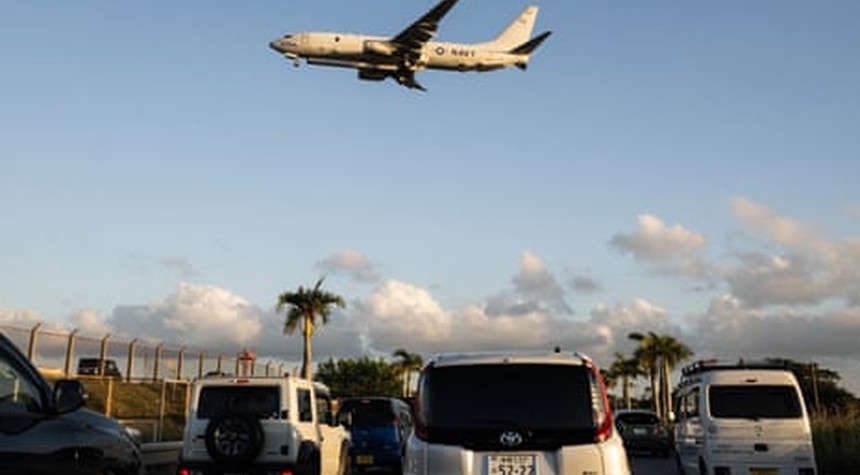
The United States military has enacted a comprehensive ban on Chinese-manufactured electric vehicles at Kadena Air Base in Okinawa, marking what may be the opening salvo in a broader security initiative across American military installations worldwide.
The prohibition, which took effect this week, targets all vehicles produced by BYD, the Chinese automaker that recently surpassed Tesla as the world’s leading seller of battery-electric vehicles. The restrictions encompass not merely privately owned automobiles but extend to commercial taxis and delivery vehicles attempting to enter the facility.
Lieutenant Colonel Alli Stormer, spokesperson for the 18th Wing at Kadena, issued an unambiguous statement regarding the rationale: “These vehicles present an unacceptable and unmitigable risk to our personnel and our mission.” Security personnel stationed at the base’s entry points have received instructions to turn away any BYD vehicles, regardless of their purpose for visiting the installation.
The significance of this decision cannot be overstated when one considers Kadena’s strategic importance. As the largest American Air Force installation east of the international dateline, this base serves as a cornerstone of Pacific deterrence. Its operational responsibilities encompass crisis response involving China, Russia, and North Korea. The base maintains an impressive arsenal, including the Typhon missile system capable of launching Tomahawk missiles across distances exceeding 1,600 kilometers, placing substantial portions of Chinese and Russian territory within striking range.
American military officials have declined to specify particular threats that prompted this action, but the decision aligns with mounting apprehensions regarding vehicle-mounted surveillance capabilities. Modern electric vehicles incorporate sophisticated arrays of cameras, sensors, and GPS tracking devices that theoretically could transmit sensitive information to foreign adversaries.
This measure represents merely one component of Washington’s increasingly stringent approach toward Chinese technology. The Pentagon added BYD to its blacklist of 188 Chinese companies suspected of maintaining ties to Beijing’s military apparatus in June of last year. That roster includes other prominent firms such as the automaker Nio, e-commerce giant Alibaba, and internet company Baidu.
The precedent for such restrictions dates to 2018, when the Defense Department prohibited smartphones manufactured by Huawei and ZTE across all military installations globally, citing identical security considerations.
Beijing has reciprocated with comparable measures. Chinese authorities barred Tesla vehicles from certain government facilities in 2021, expressing concerns about onboard cameras. That restriction was subsequently lifted in 2024 following Tesla’s receipt of an endorsement from China’s principal automotive industry association.
The broader implications of Kadena’s decision remain uncertain. Military analysts and industry observers are monitoring whether similar prohibitions will materialize at other American military installations worldwide. Given the Pentagon’s demonstrated willingness to prioritize security concerns over convenience, and considering the rapid proliferation of Chinese electric vehicles in international markets, additional restrictions appear not merely possible but probable.
What remains clear is that the intersection of automotive technology and national security has emerged as a new frontier in the ongoing strategic competition between Washington and Beijing.
Related: Tense Standoff Between US and Cuban Diplomats Interrupts United Nations Proceedings