
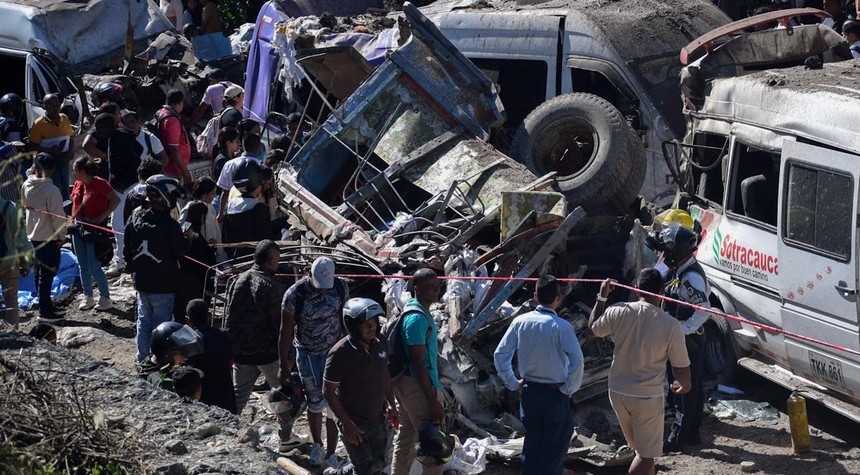
Thirteen people lost their lives and seventeen others sustained injuries when explosives detonated along a major highway in western Colombia on Saturday, marking yet another deadly chapter in the nation’s struggle against remnant guerrilla forces that refuse to lay down their arms.
The attack occurred on the Pan-American Highway in the El Tunel area of Cajibio municipality, approximately twenty-two miles from Popayan, the capital of Cauca province. Colombian authorities have attributed the violence to dissidents of the Revolutionary Armed Forces of Colombia, known as FARC, who rejected the historic 2016 peace agreement that formally ended more than five decades of civil conflict.
This assault was not an isolated incident. Cauca Governor Octavio Guzman reported that Saturday brought multiple criminal actions throughout the province, suggesting a coordinated effort by these dissident factions to destabilize the region and challenge government authority.
The governor’s response carried the weight of frustration that has been building in Colombia’s provinces, where local officials often find themselves on the front lines of violence while feeling inadequately supported by the central government. “Cauca cannot continue to face this barbarity alone,” Guzman stated. “We are facing a terrorist escalation that demands immediate responses. We demand forceful, sustained and effective action from the national government in the face of the grave public order crisis we are experiencing.”
Presidential candidate Paloma Valencia, representing the opposition Democratic Center party and a native of Cauca, characterized the attack as terrorism perpetrated by the dissident FARC faction. Her party has long maintained a hardline stance against guerrilla groups and has criticized what it views as insufficient government action against these organizations.
The violence underscores a troubling reality in Colombia. While the 2016 peace accord with the main FARC organization was hailed internationally as a historic achievement, significant factions rejected the agreement and continued their armed struggle. These dissidents have filled power vacuums in rural areas, engaging in drug trafficking, illegal mining, and extortion while terrorizing local populations.
The Cauca province has become a focal point of this violence. Its strategic location, coca cultivation areas, and smuggling routes make it valuable territory for criminal organizations and dissident guerrilla groups alike. The civilian population bears the burden of this competition for control.
Saturday’s attack on the Pan-American Highway, a vital transportation artery connecting Ecuador to the rest of Colombia, demonstrates the audacity of these groups and their willingness to strike high-profile targets. Such attacks not only claim innocent lives but also threaten economic stability and the free movement of people and goods.
The international community watches Colombia carefully. The nation’s ability to maintain security and extend government authority throughout its territory remains critical not only for Colombian citizens but for regional stability in South America. The question now facing Colombia’s national government is whether it can respond with the decisive action that provincial leaders are demanding, or whether these dissident groups will continue to operate with apparent impunity in regions far from the capital.
Related: Prince Harry Calls on United States to Honor Treaty Obligations to Ukraine