
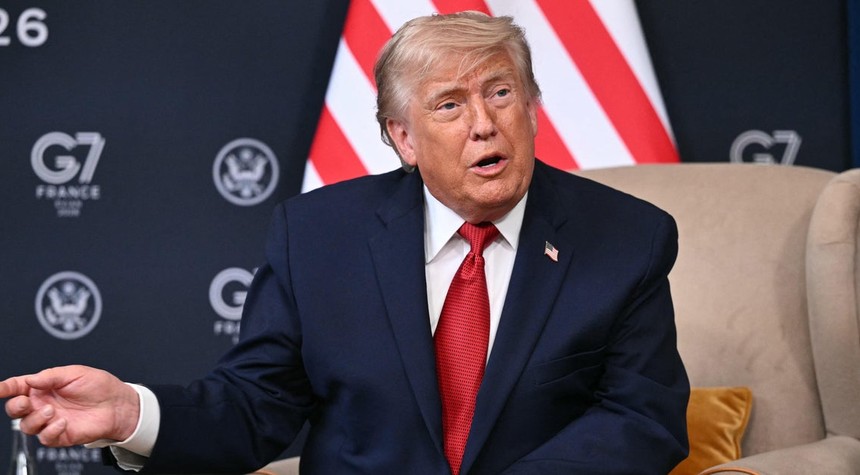
President Trump concluded his participation at the Group of Seven summit in France on Wednesday with an extensive press conference addressing the developing agreement between the United States and Iran, tensions with Israeli Prime Minister Benjamin Netanyahu, and the prospect of renewed military action should diplomatic efforts fail.
The president devoted considerable time to discussing the memorandum of understanding negotiated with Tehran, a document whose specific terms both nations have declined to release publicly. Trump indicated that Israel has received a copy of the agreement, though he did not specify when Israeli officials were provided access to the document.
The framework establishes a 60-day negotiation period for reaching a comprehensive settlement. Should those talks prove unsuccessful, the president made clear that military options remain under consideration. “If it doesn’t get done in 60 days, that’s all right. We go back to bombing,” Trump stated plainly. “I don’t want to do that, because it’s so good, but we might have to, because we’re never going to let them have a nuclear weapon.”
This forthright assessment reflects the administration’s determination to prevent Iranian nuclear weapons development while pursuing diplomatic solutions. The president’s willingness to specify consequences for failed negotiations represents a calculated approach to maintaining pressure on Tehran during what promises to be complex discussions.
The timing of a formal signing ceremony remains fluid. While both American and Iranian officials have indicated Friday as the likely date, Trump suggested Wednesday could be moved forward to Thursday, demonstrating the dynamic nature of these high-stakes negotiations.
Israeli military operations in southern Lebanon have emerged as a potential complication. Iranian officials have indicated that continued Israeli presence in Lebanon could constitute a violation of the understanding with Washington. Israeli cabinet members stated Monday that their forces would remain deployed in Lebanese territory, setting up a possible point of contention as the agreement moves forward.
The president expressed frustration with Netanyahu’s prosecution of operations against Hezbollah in Lebanon, characterizing recent Israeli strikes as excessive. “They should have been able to do the job faster,” Trump remarked. “It just goes on forever, and when that happens, it throws a negative light on the big deal, and that’s the deal with Iran.”
This public criticism of the Israeli prime minister represents a notable shift in tone from the administration’s typically strong support for Israeli security operations. The president’s comments suggest concern that prolonged military action in Lebanon could undermine the broader diplomatic framework being constructed with Iran.
Trump also referenced the 2020 assassination of Qasem Soleimani, the commander of Iran’s Revolutionary Guard Corps killed in an American airstrike during the final days of his first administration. That operation, which eliminated one of Iran’s most powerful military figures, continues to shape the strategic landscape between Washington and Tehran.
The president characterized his discussions with allied leaders at the summit as productive, stating that America’s closest partners were “thrilled that we made a deal, every one of them.” This assertion of allied support aims to demonstrate international backing for the administration’s approach to one of the most complex foreign policy challenges facing the United States.
As negotiations enter this critical 60-day period, the world watches to see whether diplomacy can resolve longstanding tensions or whether the president will make good on his promise to resume military pressure on the Islamic Republic.
Related: Pentagon Keeps 50,000 Troops in Region as Doubts Persist Over Iran Nuclear Deal