
The United States has put forward a significant proposal for artificial intelligence cooperation with China, one that seeks to establish a notification mechanism between the world’s two leading AI powers for incidents that could affect national security.
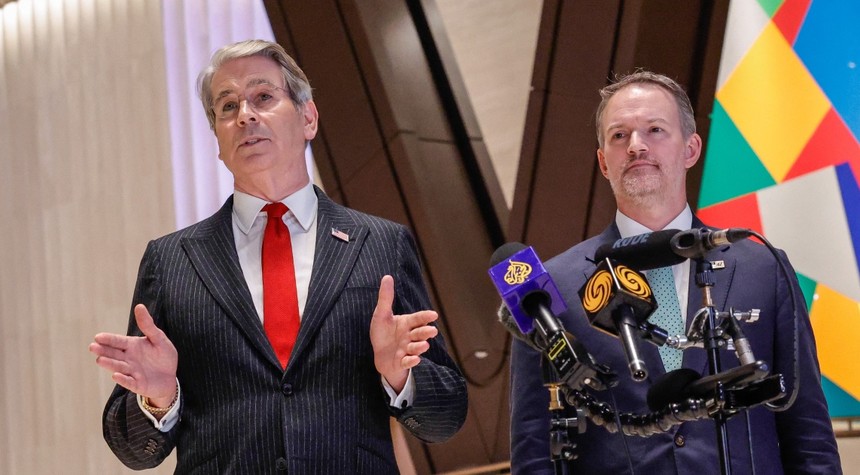
Treasury Secretary Scott Bessent disclosed the initiative Sunday following extensive discussions in New York with Chinese officials. The proposed framework would create a formal dialogue between Washington and Beijing specifically addressing AI safety concerns, representing a notable shift toward transparency in an otherwise contentious relationship.
“We think that just like with any cross-border activity, that moving from opaque to more transparency between the number one and the number two AI powers in the world is very important,” Bessent stated. Both sides have agreed to continue discussions on the matter.
The proposal arrives at a critical juncture. President Donald Trump and Chinese leader Xi Jinping are scheduled to meet Thursday in Washington, where artificial intelligence is expected to feature prominently on the agenda. The technology has generated considerable debate within policy circles, with prominent AI researchers warning of potentially existential threats emerging within years.
President Trump has characterized such catastrophic warnings as overblown while simultaneously emphasizing the strategic imperative that America maintain its lead in AI development. The administration’s position reflects a dual concern: ensuring responsible development while preventing China from achieving technological superiority.
The talks in New York brought together Treasury Secretary Bessent and U.S. Trade Representative Jamieson Greer with Chinese Vice Premier He Lifeng and chief trade negotiator Li Chenggang at JPMorgan Chase headquarters. The Chinese delegation departed without commenting to reporters.
Greer made clear that discussions regarding AI cooperation would not influence existing U.S. export controls on advanced semiconductors and manufacturing equipment. These restrictions have significantly affected Chinese AI companies’ access to cutting-edge technology, and they will remain in place regardless of any safety dialogue that emerges.
The Chinese government’s official account of the meetings, distributed through the state-run Xinhua news agency, mentioned AI only in passing and provided no details regarding the American proposal. Beijing’s readout emphasized “frank, in-depth and constructive exchanges” on economic and trade matters.
Observers suggest expectations should remain measured regarding the summit’s potential outcomes on AI. The relationship between Washington and Beijing remains fundamentally defined by mutual suspicion. Chinese officials have historically interpreted Western calls for slowing AI development as veiled attempts to hamper China’s technological advancement.
Beyond artificial intelligence, the meetings addressed the pressing question of trade relations. A temporary trade agreement between the two nations is scheduled to expire November 10, and both sides are exploring whether an extension can be negotiated.
Officials announced plans to operationalize a “Board of Trade” that was established during President Trump’s visit to Beijing in May. Additionally, discussions have begun regarding potential tariff reductions on what both sides term “non-sensitive” products. For China, this category might include consumer goods and lower-technology items. American exports under consideration include energy products, agricultural commodities, and medical devices.
The substance of these economic discussions underscores the complexity of the U.S.-China relationship. Even as both nations contemplate cooperation on existential technological risks, fundamental economic competition and strategic rivalry continue to shape nearly every aspect of their interaction.
Whether this week’s summit will produce concrete agreements or merely establish frameworks for future discussions remains uncertain. What is clear is that the stakes extend beyond bilateral concerns to encompass global implications for technology governance and economic stability.
Related: U.S. Naval Operations Block Iranian Oil Exports While Protecting International Commerce