
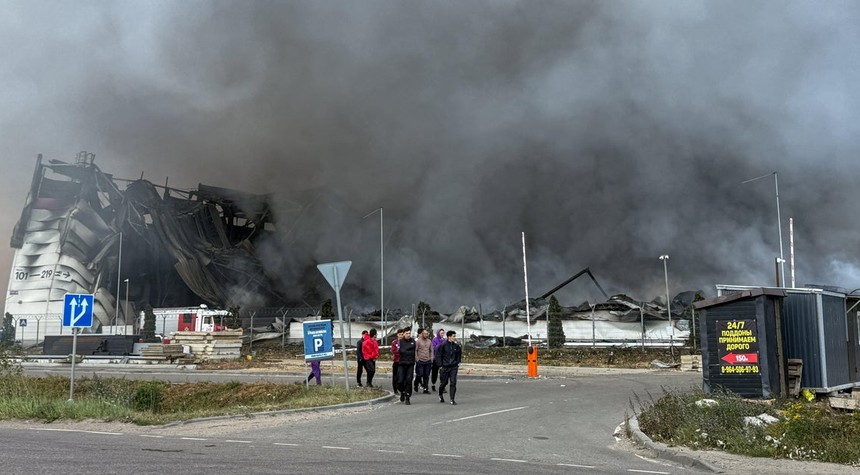
The conflict in Eastern Europe reached a new threshold this week as Ukrainian forces launched what Russian officials described as one of the most extensive aerial assaults on Moscow since the war’s inception nearly five years ago.
Moscow Mayor Sergei Sobyanin reported that 637 Ukrainian drones targeted the Russian capital in an attack that began Tuesday evening and extended into Wednesday morning. Russian air defense systems intercepted at least 180 of these unmanned aerial vehicles over the Moscow region, with an additional 150 shot down across other parts of the country.
The assault resulted in fires at a high-rise building and a warehouse facility operated by Wildberries, Russia’s largest online retail company. Ukrainian defense officials have systematically targeted the retailer’s infrastructure over the past month, destroying seven of the company’s ten largest logistics centers. While no fatalities were confirmed from the drone strikes, Russian authorities reported injuries among the civilian population.
Russia responded with its own military action, launching an overnight attack on Pechenhy in Ukraine’s eastern Kharkiv region that killed ten people. Ukrainian President Volodymyr Zelenskyy pledged retaliation and called upon Western allies to increase pressure on Moscow.
The exchange has taken on additional diplomatic dimensions following Russian allegations regarding British-manufactured drones. Russian officials claimed that debris recovered from recent attacks confirmed the use of British-made unmanned aerial vehicles in Ukrainian deep-strike operations. The Russian embassy in London issued a stern warning, accusing Britain of deliberately escalating the conflict while maintaining a facade of pursuing peace.
These accusations follow Britain’s announcement in April of its largest drone package for Ukraine to date, committing to supply 120,000 drones throughout the current year. The comprehensive package encompasses long-range strike capabilities, intelligence and reconnaissance platforms, and logistics support vehicles, with deliveries commencing in April according to British defense officials.
The British government has responded firmly to Russian threats. A Ministry of Defense spokesperson reaffirmed Britain’s commitment to providing Ukraine with necessary defensive equipment against what London characterizes as an illegal invasion. British Prime Minister Andy Burnham reinforced this position, stating that Britain’s support represents a longstanding commitment to stand with Ukraine against Russian aggression.
The intensification of drone warfare marks a significant evolution in the conflict’s character. Ukraine has developed substantial domestic drone manufacturing capabilities, producing the vast majority of its unmanned aerial vehicle fleet. This technological development has enabled Kyiv to extend its operational reach deep into Russian territory, targeting both military installations and economic infrastructure.
The strategic targeting of logistics facilities, particularly those belonging to major commercial enterprises like Wildberries, suggests a calculated effort to disrupt Russia’s economic infrastructure and supply chains. Such operations represent a broadening of Ukraine’s military strategy beyond purely military targets.
As the war enters its fifth year, the escalating drone warfare demonstrates both sides’ commitment to prosecuting the conflict with increasing intensity. The involvement of Western-supplied equipment continues to complicate diplomatic efforts and raises questions about the conflict’s potential expansion beyond Ukraine’s borders.
The international community watches as this technological warfare evolves, understanding that the precedents established in Ukraine may well define the character of future conflicts worldwide.
Related: Endangered Orca Shows Signs of Gunshot Wounds After Years of Boat Conflicts