
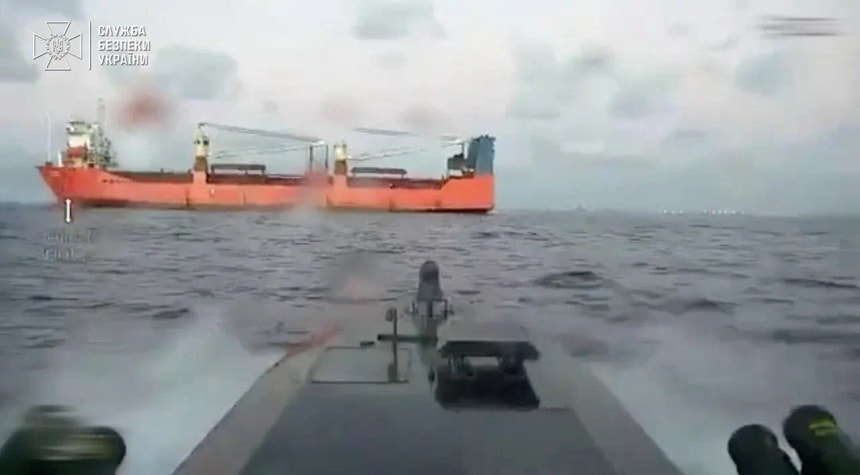
The complex web of international allegiances and conflicts has claimed two more lives, this time in North Africa, where the reverberations of the war in Ukraine have reached Libyan shores with tragic consequences.
The Libyan National Army confirmed Tuesday that two of its servicemen died from injuries sustained when Ukrainian forces launched a drone attack on a Russian warship moored at Benghazi port. The deceased, identified as Al-Taher Abdullah al-Sadiq and Lieutenant Ali Mohammed al-Said, were members of the Naval Forces General Staff. The attack occurred Sunday, but the soldiers succumbed to their injuries days later.
In a statement posted to social media, the Libyan National Army characterized the Ukrainian operation as a sinful aggression and vowed retribution. The statement included Quranic verses warning that those who commit wrongdoing will face consequences for their actions.
The incident has exposed the fractures within Libya itself, a nation that remains divided more than a decade after the fall of Muammar Qadaffi. The country now operates under two competing governments. The eastern government, known as the Government of National Stability and backed by the Libyan National Army, finds itself broadly aligned with Russian interests. The western government, the Government of National Unity based in Tripoli, holds recognition from the United Nations and enjoys support from the United States and European Union.
In a rare moment of agreement, both rival governments condemned the Ukrainian attack. The Tripoli-based foreign ministry expressed particular concern over statements made by the Ukrainian president regarding military operations near Benghazi. Officials in Tripoli categorically rejected the notion that any foreign military operations should be conducted within Libyan territory or territorial waters, and denied accusations that the Ukrainian strike was launched from areas under their control.
The eastern government, however, has requested an investigation into whether the drone attack originated from Western Libya, citing intelligence suggesting Ukrainian military personnel may be operating from locations around Misrata, Zawiya, and other areas.
Western Libya’s government countered by criticizing their eastern counterparts for hosting Russian naval vessels in the first place, arguing that permitting illicit foreign forces access to national facilities invites external conflicts onto Libyan soil.
Russia, predictably, supported Libya’s vow for revenge. Kremlin spokesman Dmitry Peskov stated plainly that no state would leave an attempt on the lives of its servicemen unpunished.
Ukraine, while confirming the strike, defended its actions as legitimate self-defense. Ukrainian Foreign Minister Andrii Sybiha emphasized that Ukraine respects Libyan sovereignty and territorial integrity, insisting that Ukrainian actions target Russian armed aggression rather than Libya or its people. Sybiha argued that the Russian naval vessels and cargo ships transporting military equipment constituted valid military targets under Article 51 of the United Nations Charter.
Ukrainian President Volodymyr Zelenskyy also confirmed a separate drone strike on a Russian vessel in the Gulf of Finland this past Saturday.
What remains clear is that the conflict between Russia and Ukraine continues to spill beyond the borders of Eastern Europe, drawing nations and peoples into a struggle that grows more complex with each passing month. The deaths of two Libyan servicemen stand as a sobering reminder that modern warfare recognizes few boundaries, and that consequences often fall upon those who never chose involvement in conflicts not their own.
Related: Iranian Singer Receives 74 Lashes for Performing Without Mandatory Head Covering