
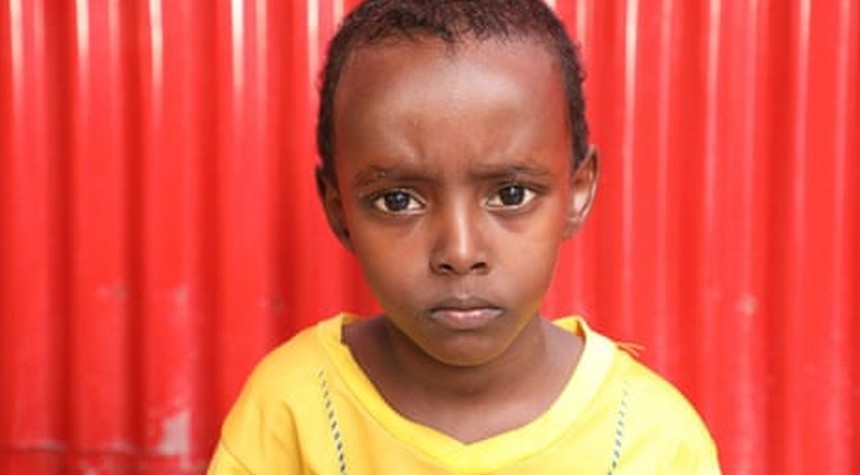
The consequences of American military operations in the Horn of Africa have come into sharp focus through the plight of one seven-year-old boy whose future hangs in the balance.
Abdiqadir Salah remains hospitalized in Somalia, his small body harboring shrapnel fragments from a United States airstrike conducted six months ago. Medical professionals warn that without an emergency surgical procedure costing approximately 750 pounds, the child faces permanent loss of his ability to walk. His family lacks the financial means to pay for the operation, and the American government has thus far refused to provide compensation or even acknowledge that civilians were harmed in the strike.
The shrapnel remains embedded in two locations along Abdiqadir’s back and in his upper thigh, physical evidence of an operation that claimed at least twelve civilian lives, including eight children. Military analysts and regional observers have identified this incident as the deadliest attack on non-combatants in Somalia during either of President Trump’s administrations, ranking among the most catastrophic civilian casualty events in recent American operations in the region.
The United States government maintains its official position that no civilians were killed or injured during the airstrike in question. This stance presents an insurmountable obstacle for families seeking compensation or medical assistance for injuries sustained during American military operations in Somalia.
The broader implications of this case extend beyond one family’s tragedy. American counterterrorism operations in Somalia have intensified in recent years as part of ongoing efforts to combat al-Shabaab and other extremist organizations that threaten regional stability and American interests. These operations, while aimed at legitimate military targets, occur in densely populated areas where the distinction between combatants and civilians becomes perilously thin.
The question of accountability in overseas military operations has long troubled American foreign policy. When civilian casualties occur, the mechanisms for verification, acknowledgment, and compensation remain inadequate at best. Families affected by these strikes often find themselves navigating an impenetrable bureaucracy, facing denials from a government thousands of miles away that insists no harm was done, despite evidence to the contrary.
For young Abdiqadir, the geopolitical complexities matter little. His immediate reality consists of pain, immobility, and the very real possibility of permanent disability. The shrapnel that medical imaging has clearly identified cannot be dismissed by official statements from Washington.
This case raises fundamental questions about American military engagement in regions where our national security interests intersect with the lives of innocent civilians. The precision of modern warfare, often touted as a means of reducing collateral damage, has not eliminated the human cost of these operations. When mistakes occur, or when civilians find themselves in harm’s way despite careful targeting, the moral obligation to acknowledge and address that harm remains.
As Abdiqadir’s condition deteriorates with each passing day, the silence from American officials speaks volumes about the gap between our stated values and our actions abroad. The young boy’s struggle represents more than one family’s tragedy. It stands as a test of American integrity in how we conduct ourselves on the world stage and how we respond when our actions, however well-intentioned, cause suffering to the innocent.
Related: Trump Sets 60-Day Deadline for Comprehensive Iran Deal at G7 Conclusion