
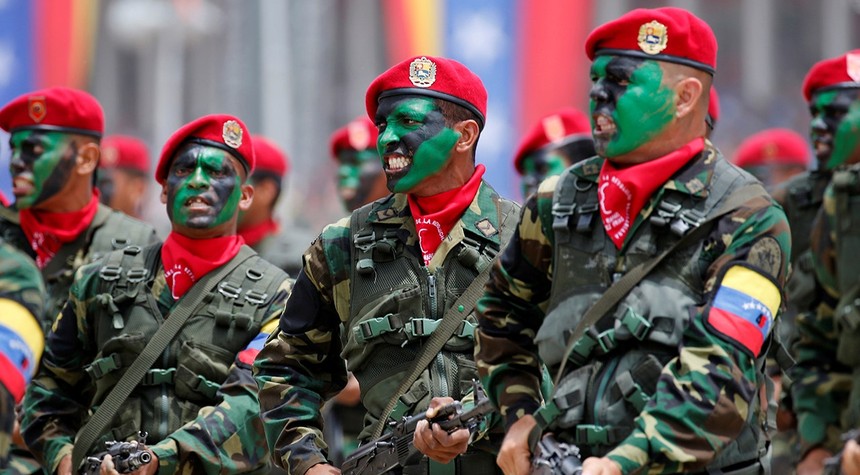
The Venezuelan military, long portrayed as a significant regional force, may be far weaker than its public displays suggest, according to defense analysts and former diplomats familiar with the situation.
As tensions escalate between Washington and the Maduro government in Caracas, experts are providing sobering assessments of Venezuela’s actual military readiness. While the country’s armed forces appear formidable in official parades and on paper, years of systemic corruption and political interference have significantly degraded their operational capabilities.
Isaias Medina, an international lawyer and former Venezuelan diplomat who broke with his government to testify at the International Criminal Court, characterized the current Venezuelan state as fundamentally criminalized. He described it as dominated by narcotrafficking networks rather than functioning as a traditional nation-state.
“Venezuela today resembles a fortress built on sand wrapped around a criminal regime,” Medina stated. He suggested that any potential American action would amount to removing what he termed “a terrorist cartel that settled next door” rather than a conventional military operation against a sovereign nation.
However, Medina emphasized the critical importance of restraint given Venezuela’s dense civilian population, which he noted has been victimized by the regime itself. He advocated for what he called “overwhelming bias toward restraint and longer operational timelines,” specifically avoiding targets that cannot be struck with precision.
The military structure itself appears compromised. Equipment sits rusting from inadequate maintenance, while thousands of politically appointed generals maintain tenuous control over an estimated 100,000 lower-ranking troops. These junior personnel, analysts suggest, may well abandon their posts when faced with serious pressure.
Retired Rear Admiral Mark Montgomery, who serves as senior director at the Foundation for Defense of Democracies’ Center on Cyber and Technology Innovation, offered a tactical assessment focused on Venezuela’s air and naval capabilities. These systems, he indicated, represent the most relevant threat to any American operations, though even they would likely prove insufficient.
Venezuela’s defensive arsenal includes fighter aircraft, limited naval vessels, and Russian-manufactured surface-to-air missile systems. Yet Montgomery’s assessment suggests these would present only temporary obstacles to American forces.
“Reasonably speaking, in the first day or two of a campaign plan, we can eliminate the air and maritime threat to U.S. forces,” Montgomery explained. He outlined a strategy involving simultaneous strikes on airfields, aircraft, and air defense systems to prevent any coordinated Venezuelan response.
When asked directly whether Venezuela could mount effective retaliation following such strikes, Montgomery’s response was unequivocal regarding air campaigns.
The assessments come as the White House considers various options for addressing what it characterizes as a criminal narco-state operating in America’s hemisphere. Any broader ground operation, experts caution, would prove considerably more complex than air strikes alone, regardless of Venezuela’s military weaknesses.
The situation presents Washington with a strategic challenge that extends beyond pure military calculations. The presence of millions of civilians, the entrenched nature of criminal networks within the government structure, and the unpredictable behavior of politically appointed military leadership all complicate what might otherwise appear straightforward from a purely tactical standpoint.
What remains clear is that Venezuela’s military, despite its public displays of strength and Soviet-era equipment, may not pose the conventional deterrent its leadership hopes to project. Whether that calculation influences American policy decisions in the coming weeks remains to be seen.
Related: European Union Imposes $140 Million Fine on X Platform as Transatlantic Tensions Rise